Physical Address
304 North Cardinal St.
Dorchester Center, MA 02124
Physical Address
304 North Cardinal St.
Dorchester Center, MA 02124

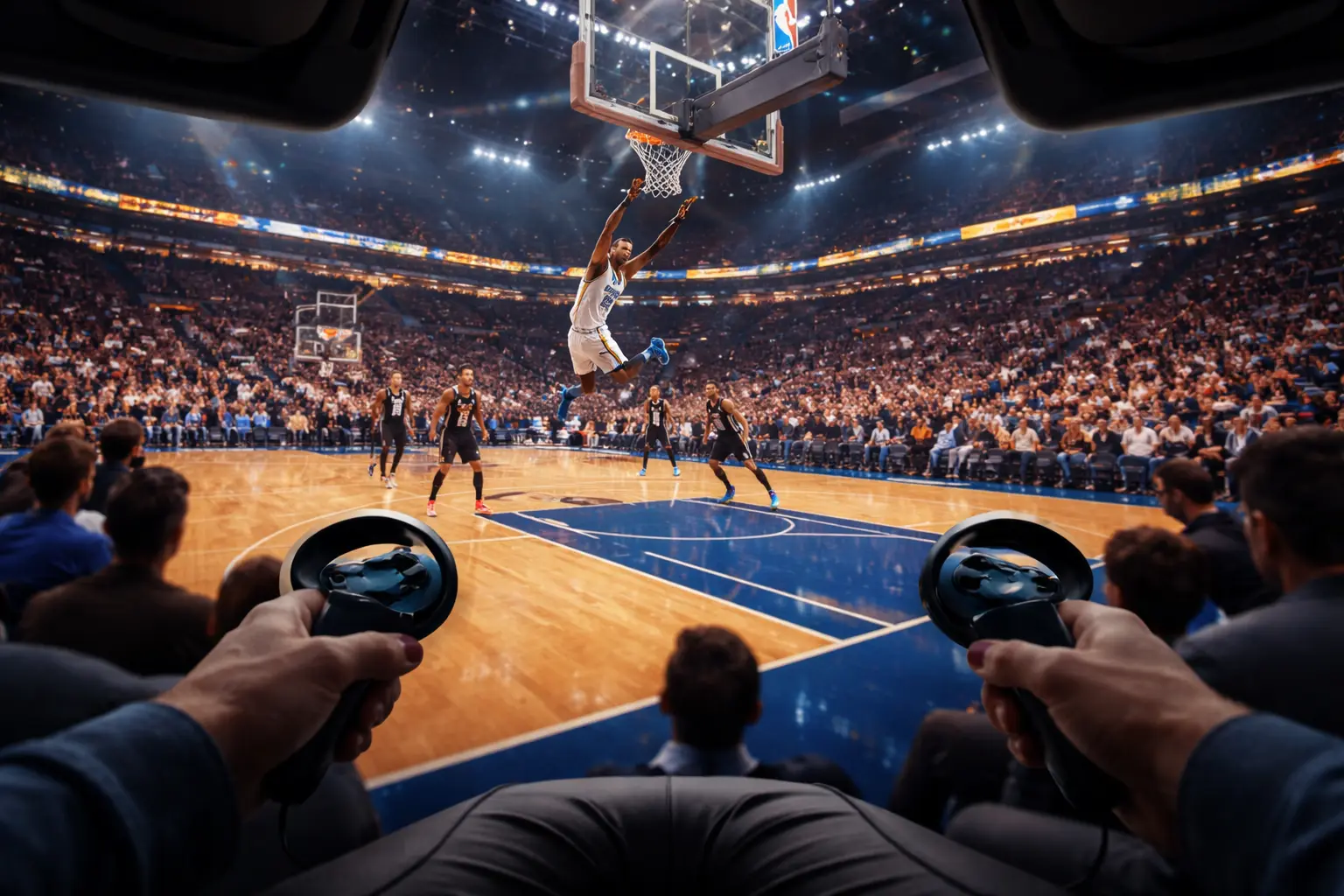
Discover how virtual reality NBA games let you watch live basketball in immersive VR. Learn how it works, costs, platforms, and how to get started.
You’ve watched buzzer-beaters from your couch. You’ve replayed dunks in slow motion. You’ve leaned forward during clutch free throws as if your body could somehow influence the shot.
But imagine this: you turn your head and see the bench react in real time. You glance toward the corner and watch a shooter set his feet before the pass even arrives. The crowd noise swells around you — not from your TV speakers, but from every direction.
That’s the difference virtual reality NBA games bring to your living room. You’re no longer just watching basketball. You’re inside it.
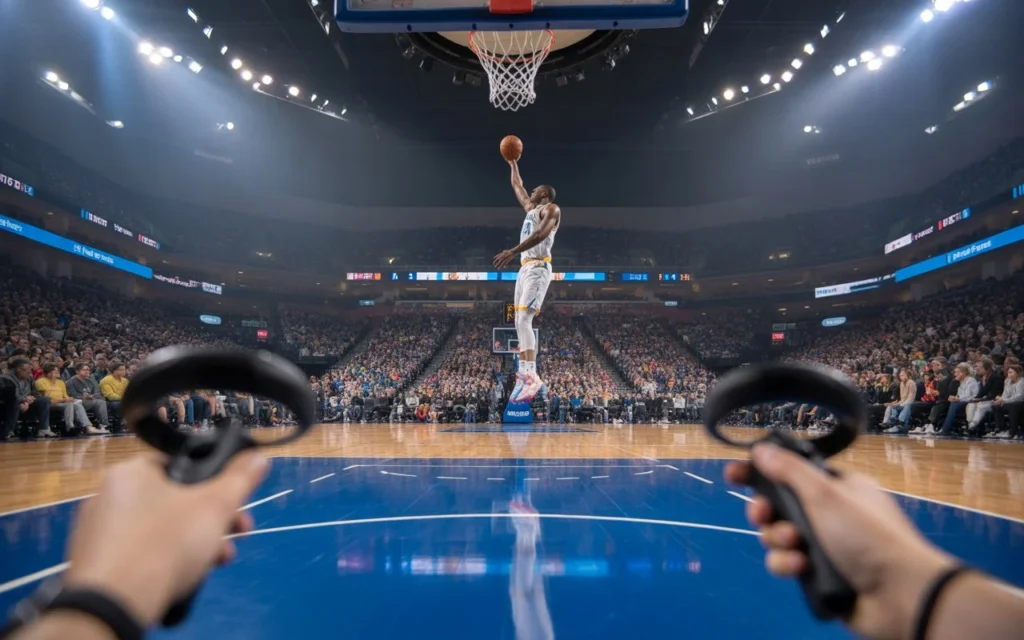
If you’ve been wondering whether VR basketball is a gimmick or the future of fandom, this guide will walk you through everything you need to know — and help you decide if it’s worth your time and money.
The sports world has always embraced innovation, instant replay, high-definition broadcasting, and advanced analytics. Now, immersive technology is taking center stage.
The National Basketball Association was one of the first major leagues to experiment with virtual reality broadcasts. Through partnerships with tech companies like Meta and early VR streaming pioneers such as NextVR, the league began offering select games in immersive formats.
Why does that matter to you?
Because fan expectations have changed. You don’t just want to watch — you want to experience. The global VR market continues to grow year after year, and sports is one of the fastest-expanding categories within it. As hardware improves and streaming becomes smoother, virtual reality NBA games are moving from novelty to mainstream.
The term can mean two slightly different things, and it’s important you understand both.
These are real NBA games captured using specialized 180° or 360° cameras placed courtside. When you put on your headset, you see the action from a fixed seat perspective — often as if you’re sitting just behind the baseline or near midcourt.
You can:
It’s not a traditional broadcast with forced camera cuts. You control where you look.
These are interactive basketball simulations designed specifically for virtual reality. Instead of watching professionals, you’re on the court shooting, defending, and moving with motion controls.
While both fall under “virtual reality NBA games,” live VR broadcasts are what truly redefine how you consume real NBA matchups.
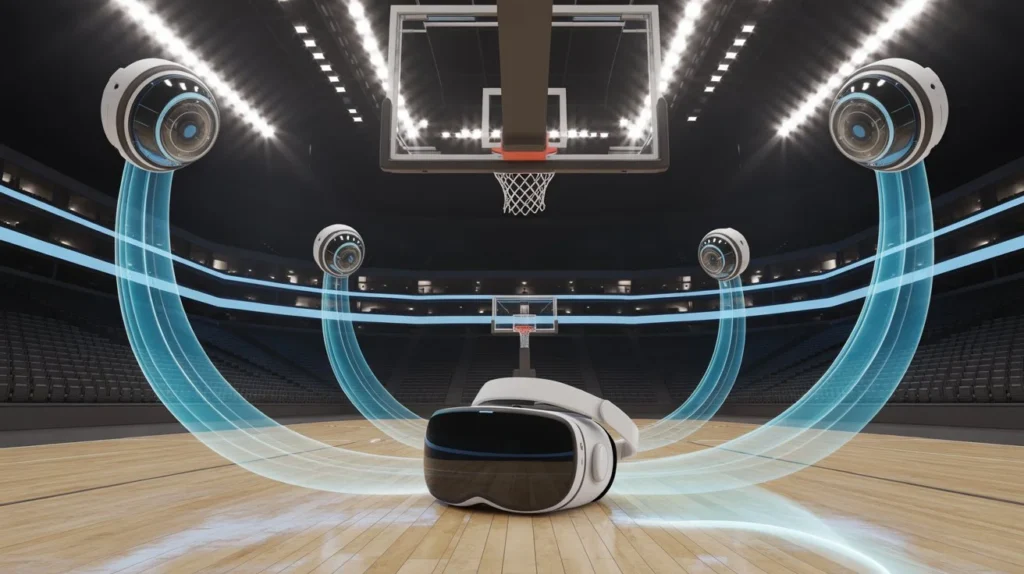
You might assume it’s just a camera strapped courtside. In reality, the process is far more complex.
Here’s how it typically unfolds:
To access this experience, you’ll need a compatible headset such as the Meta Quest 3 or other modern VR devices. You’ll also need a strong, stable internet connection — ideally high-speed broadband — to prevent lag or visual artifacts.
Watching basketball in VR isn’t just about sharper resolution. It’s about perspective.
Here’s what changes for you:
Instead of waiting for a director to switch angles, you decide what matters. Want to study off-ball movement? Turn your head. Curious about a coach’s reaction? Look toward the bench.
In traditional broadcasts, crowd noise is compressed into stereo sound. In VR, cheers erupt behind you. Sneakers squeak beside you. The experience feels layered and dimensional.
Front-row NBA tickets can cost hundreds — sometimes thousands — of dollars. Virtual reality NBA games give you a similar visual experience at a fraction of the cost.
If you live outside the United States, traveling to a game isn’t practical. VR collapses geography. From anywhere in the world, you can feel like you’re in the arena.
Not all VR hardware delivers the same quality. Your choice of headset directly affects immersion, comfort, and clarity.
Here are two major options:
When choosing, consider:
Your experience will only be as good as the hardware you use.
Before you buy a headset, you probably want a realistic breakdown.
If you’re a casual fan who watches one game a month, it may not justify the cost. But if basketball is part of your routine — if you follow trades, stats, and playoff races — virtual reality NBA games can redefine how you engage with the sport.
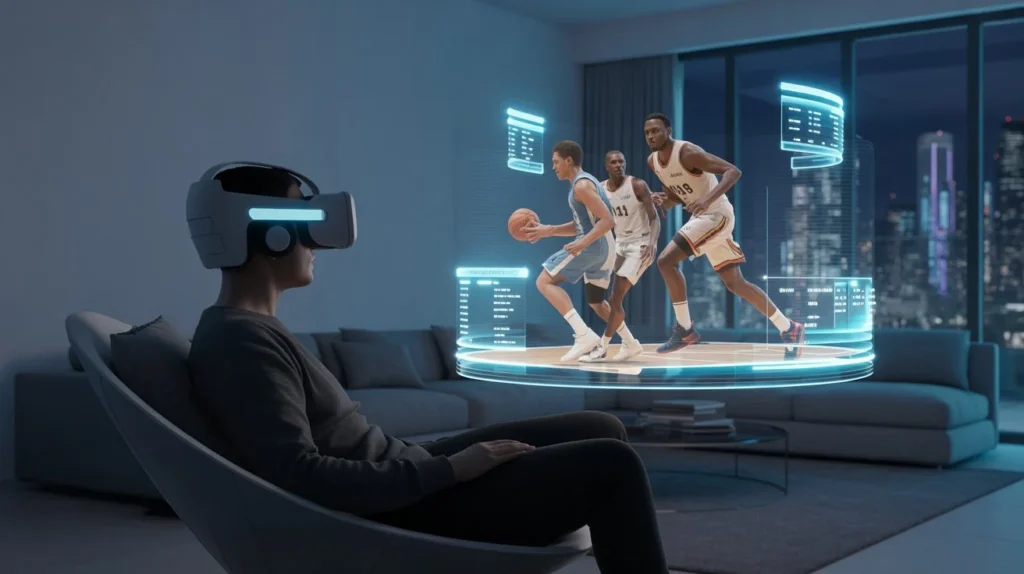
What you’re seeing now is only the beginning.
Industry experts predict:
Imagine this: you’re watching a fast break and, with a simple gesture, real-time stats appear beside the player. Or you switch instantly between multiple immersive seats.
As streaming infrastructure improves and hardware becomes lighter and more affordable, VR basketball may shift from premium feature to standard viewing option.
If you’re ready to try it, here’s a simple roadmap:
For the best experience:
The first time you load into a live game, give yourself a few minutes to adjust. Once your eyes adapt, the immersion becomes surprisingly natural.
Virtual reality NBA games are immersive basketball experiences delivered through VR headsets. They can include live NBA game broadcasts captured in 360° video or interactive VR basketball simulations.
You need a compatible VR headset, access to a supported streaming app, and a reliable internet connection. Once set up, you can stream select NBA games in immersive formats.
Yes. At minimum, you need a VR headset and high-speed internet. Some platforms may require additional subscriptions.
That depends on what you value. If you want total immersion and control over your viewing angle, VR delivers something traditional TV cannot. However, standard broadcasts remain more convenient for quick, passive viewing.
Costs vary depending on your headset and subscription. Expect to invest several hundred dollars upfront for hardware, plus any service fees.
Availability depends on broadcasting agreements and platform partnerships. Not every game is currently offered in VR, but coverage continues to expand.
Basketball has always been about energy, momentum swings, roaring crowds, split-second decisions. Traditional TV captures the action. Virtual reality NBA games capture the atmosphere.
If you crave a deeper connection to the sport, VR offers something refreshingly different. You’re not staring at a rectangle on the wall. You’re immersed in hardwood intensity, scanning the court, reacting in real time.
Technology rarely changes how you feel about sports. This might be one of the exceptions.
If you’re serious about basketball and curious about what comes next, explore your headset options, check available VR broadcasts, and test the experience for yourself.
The next time the clock winds down in a close game, you won’t just be watching history unfold.
You’ll feel like you’re part of it.