Physical Address
304 North Cardinal St.
Dorchester Center, MA 02124
Physical Address
304 North Cardinal St.
Dorchester Center, MA 02124

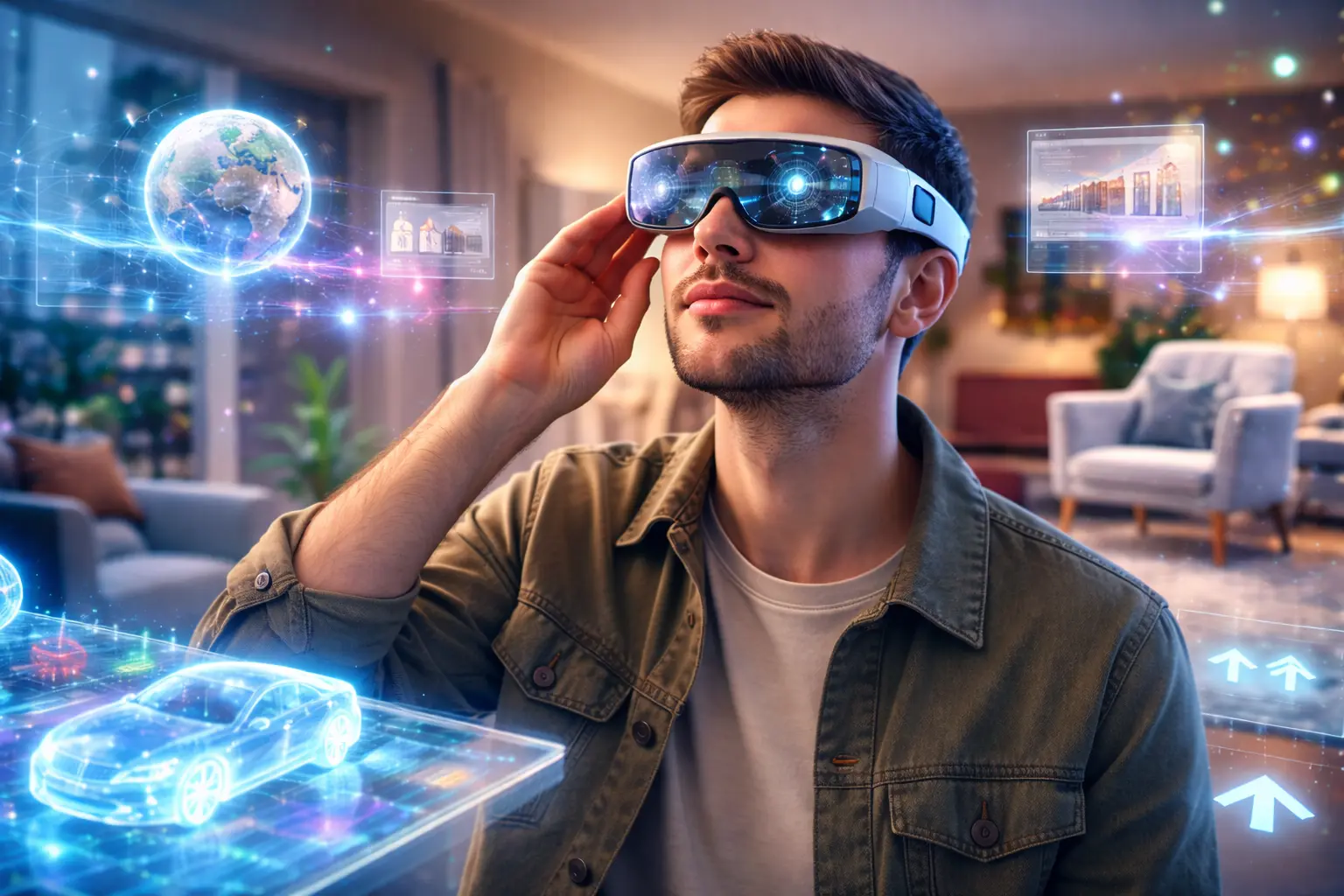
This Augmented Reality Guide explains what AR is, how it works, key technologies behind it, and real-world applications in 2026
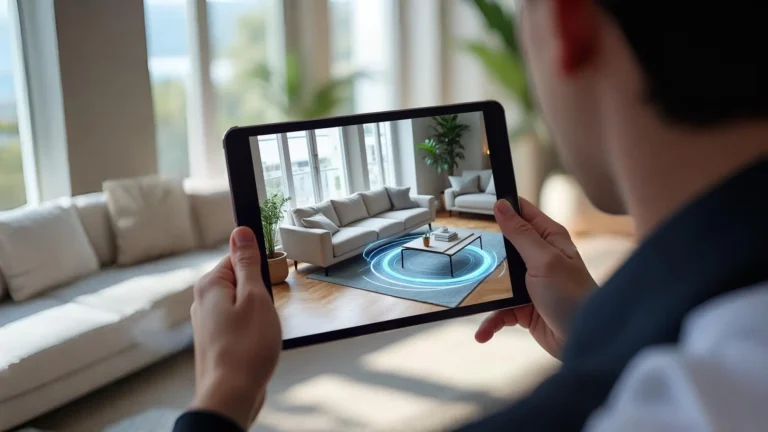
You don’t need a futuristic headset to experience augmented reality. If you’ve ever previewed a sofa in your living room using your phone, tried on sunglasses virtually, or watched player stats appear live during a sports broadcast, you’ve already stepped into the world of AR.
This Augmented Reality Guide is designed to help you understand exactly what AR is, how it works behind the scenes, and why it’s becoming one of the most important technologies of 2026. Whether you’re a curious beginner, a business owner, or someone considering a career in immersive tech, you’ll walk away with clarity and practical insight.
Augmented reality (AR) is a technology that overlays digital content onto your real-world environment in real time. Instead of replacing your surroundings, like virtual reality does, AR enhances what you already see.
When you use AR, you’re looking at the real world through a device such as a smartphone, tablet, or smart glasses. The system detects surfaces, objects, and spatial positioning, then places digital elements, like 3D models, text, or animations, into your field of view.
Understanding the difference helps you position AR correctly:
If VR immerses you in a new world, AR improves the one you’re already in.
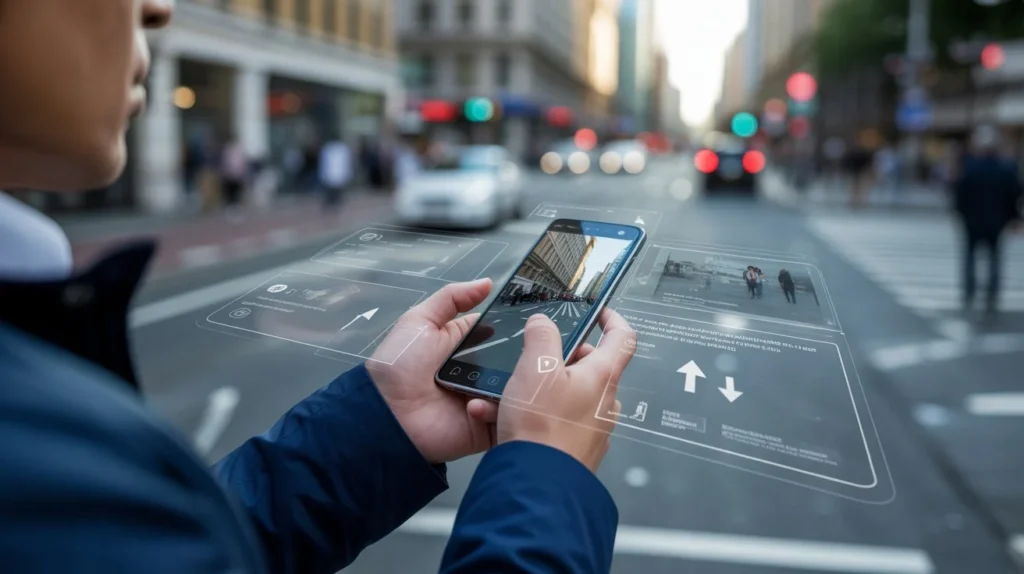
To fully grasp this Augmented Reality Guide, you need to understand the technical foundations. AR feels seamless, but under the surface, several systems work together.
AR can operate on:
For example, devices like the Microsoft HoloLens 2 use advanced sensors and depth cameras to map your surroundings.
Key hardware elements include:
Your device constantly scans the environment to understand surfaces, distance, and orientation.
The software layer is where AR becomes intelligent.
Core technologies include:
Development platforms like ARKit and ARCore allow developers to build AR experiences for millions of mobile users. Game engines such as Unity make it easier to render realistic 3D content.
When you move your phone around a room and see a virtual chair stay anchored to the floor, that stability is the result of precise spatial tracking.
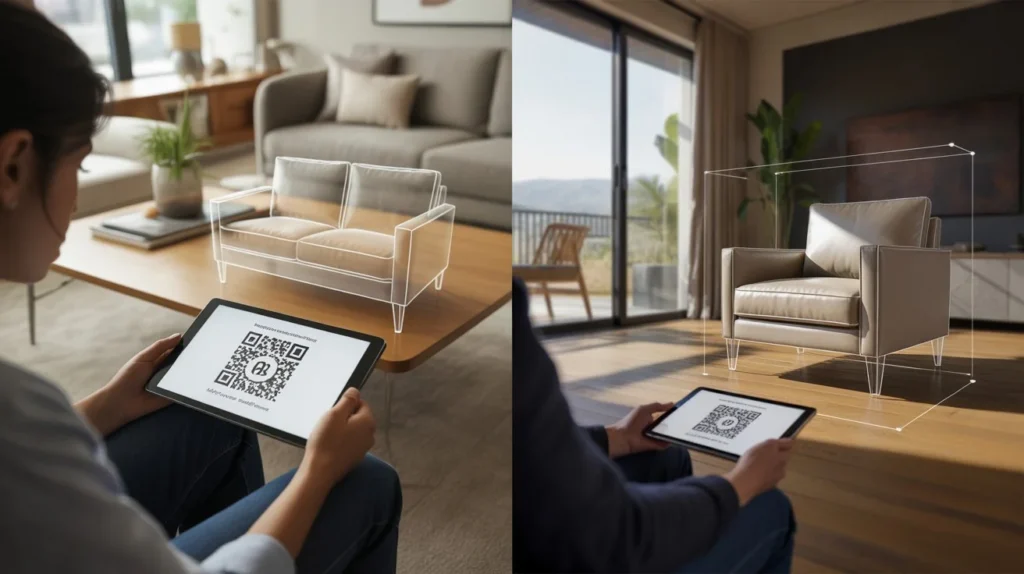
AR isn’t a single format. It comes in multiple forms, each suited to different applications.
Each type serves a distinct purpose, and understanding them helps you identify opportunities for practical use.
AR has moved far beyond novelty filters. It now plays a measurable role across industries.
Healthcare organizations use AR for:
Instead of learning solely from textbooks, medical students can explore interactive 3D organs layered onto physical mannequins. Surgeons can visualize critical structures during procedures.
For you as a patient, this can mean improved diagnostic precision and better-informed treatment discussions.
When you integrate AR into education, learning becomes active rather than passive.
You can:
Instead of memorizing information, you experience it. That shift improves engagement and retention.
Retail brands use AR to reduce uncertainty and returns.
You can:
When you can see products in context, you make more confident purchasing decisions.
AR enhances how you consume live events.
You experience:
As a viewer, you gain deeper insight into the game without leaving your seat.
Enterprises use AR to improve operational efficiency.
Applications include:
If you manage a distributed team, AR can reduce travel costs and accelerate problem-solving.
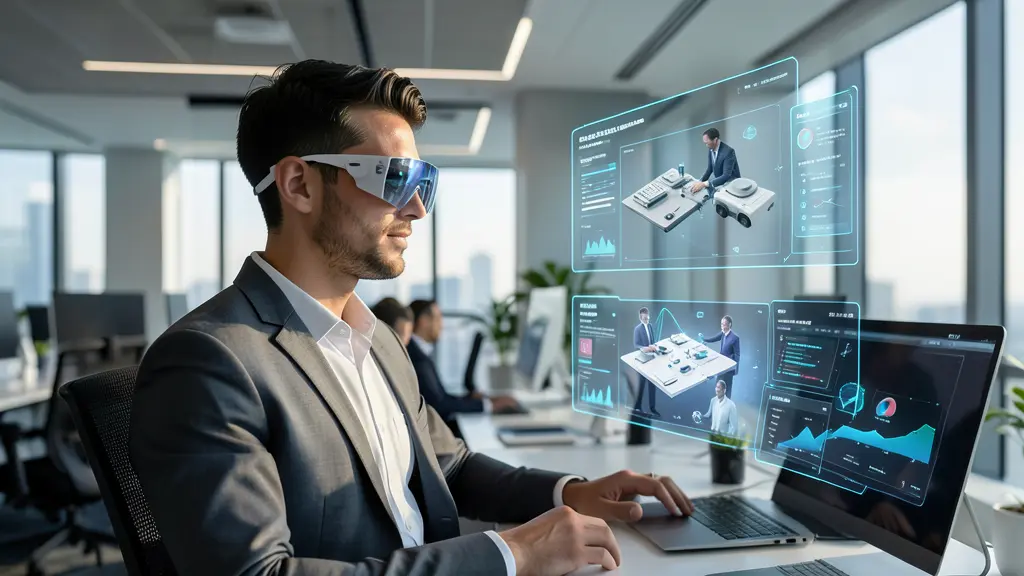
AR is no longer experimental. It’s part of a broader shift toward spatial computing.
Several factors drive its growth:
As devices become lighter and more powerful, AR experiences feel less intrusive and more natural.
For you as a professional, this means new opportunities. For you as a consumer, it means smoother integration between digital tools and everyday life.
AR offers tangible advantages:
When information appears directly in your environment, it becomes actionable.
No Augmented Reality Guide would be complete without discussing limitations.
You may encounter:
AR devices collect environmental data. That raises legitimate questions about how data is stored and protected. As adoption grows, regulation and best practices will continue evolving.
If you’re curious, starting is easier than you think.
You likely already have the hardware in your pocket.
If you want to build AR experiences:
You don’t need advanced hardware to prototype ideas. Mobile-based AR development is accessible and scalable.
Looking ahead, several trends will shape AR in 2026 and beyond:
As computing shifts from screens to space, AR becomes a foundational interface.
Instead of looking down at devices, you interact with information layered directly into your surroundings.
This Augmented Reality Guide explains what AR is, how it works, the different types available, real-world applications, benefits, challenges, and future trends.
Augmented reality enhances your real environment with digital overlays. Virtual reality replaces your environment entirely with a simulated world.
Costs vary depending on complexity. Consumer AR apps built for smartphones are relatively affordable. Enterprise systems involving custom hardware, spatial mapping, and integration into existing infrastructure require higher investment.
Growth is driven by improved mobile hardware, better computer vision algorithms, enterprise adoption, and the integration of AR into everyday consumer platforms.
Augmented reality is not a passing trend. It represents a shift in how you interact with information. Instead of switching between physical and digital spaces, AR merges them.
You can already see its presence in healthcare, retail, education, sports, and enterprise operations. As hardware improves and development tools mature, AR will become even more embedded in daily life.
If you’re a reader exploring this space, start experimenting with AR apps and features available on your device. If you’re a business owner, evaluate where visualization and real-time overlays could improve efficiency. If you’re considering a career in immersive technology, now is the time to build foundational skills.
The augmented layer is forming over the physical world. The question is not whether AR will matter; it’s how you will use it.