Physical Address
304 North Cardinal St.
Dorchester Center, MA 02124
Physical Address
304 North Cardinal St.
Dorchester Center, MA 02124

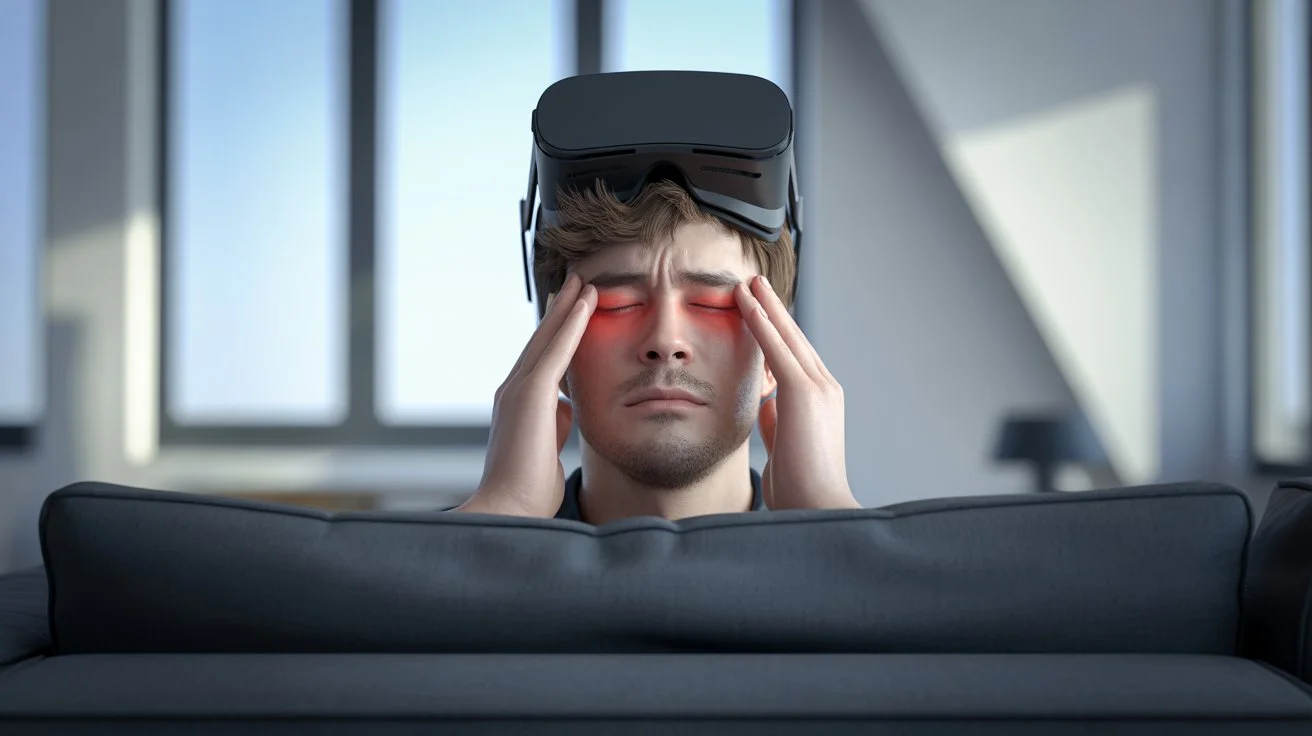
Are VR headsets bad for your eyes? Discover tips to protect your vision while enjoying virtual reality safely.
You put on your headset, tighten the strap, and suddenly you’re somewhere else. A racetrack. A haunted house. A boxing ring. It feels real.
Then you take it off.
Your eyes feel… tired. Maybe dry. Maybe a little unfocused.
And that question creeps in: are VR headsets bad for your eyes?
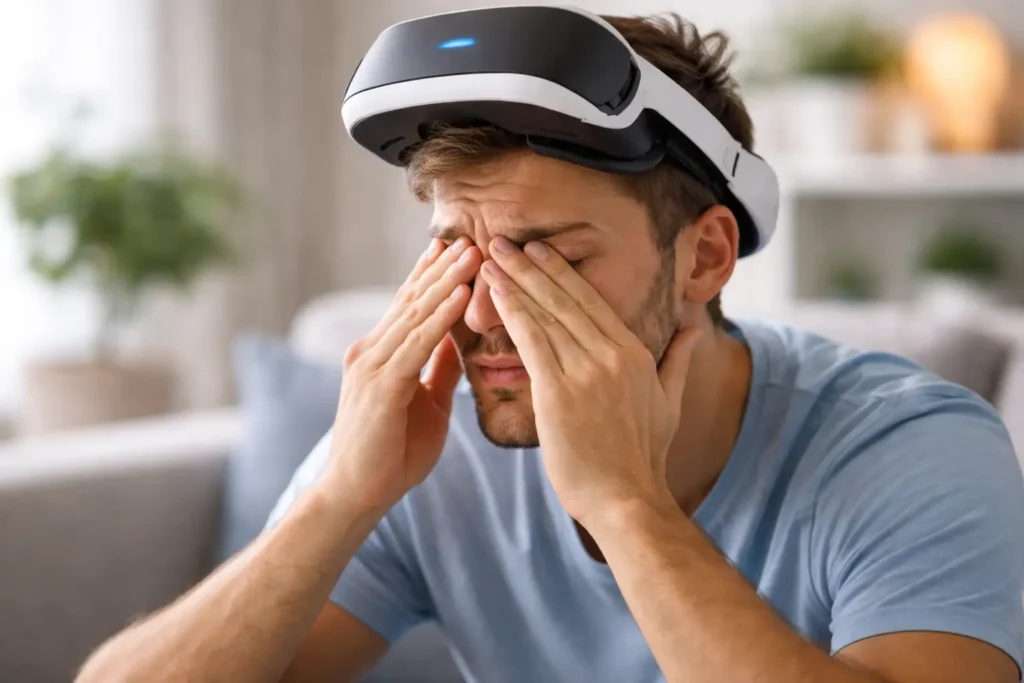
It’s a smart concern. You only get one pair of eyes. And when a device sits just millimeters from them, it’s reasonable to wonder what’s happening beneath the surface.
In this in-depth guide, you’ll discover what science actually says about VR and eye health, what symptoms are normal, what risks experts are still studying, and how you can protect your vision while enjoying virtual reality.
Before you assume damage, you need to understand how virtual reality works.
When you use a headset, the screens aren’t technically forcing your eyes to focus inches away. Instead, special lenses bend light so your brain interprets the image as being farther away. That’s how depth perception is created.
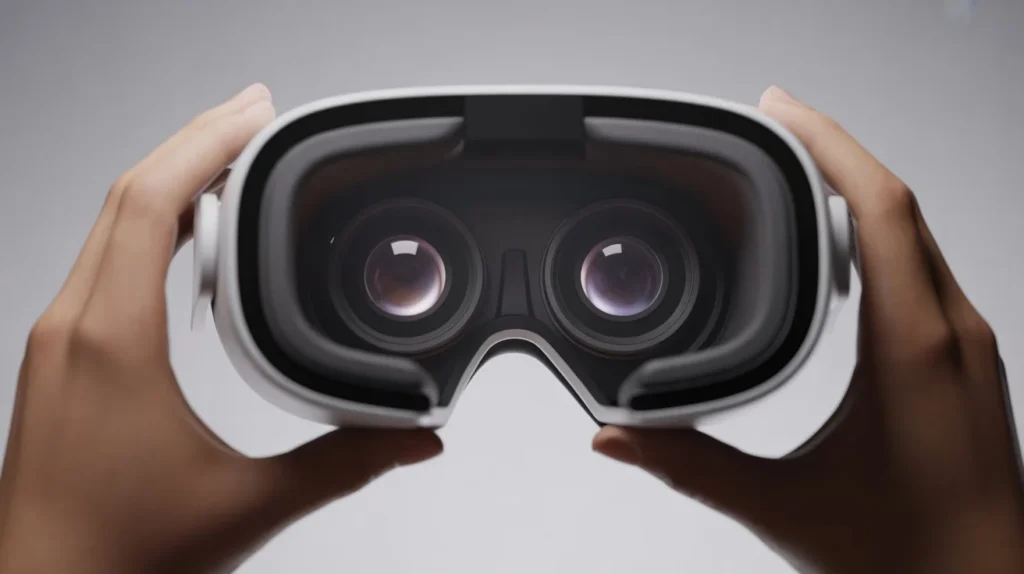
Inside most modern headsets:
This creates immersion. But it also creates something called vergence-accommodation conflict.
In simple terms:
That mismatch can lead to visual fatigue.
According to the American Academy of Ophthalmology, digital screens, including immersive ones, can contribute to temporary eye strain. However, strain does not equal structural damage.
That distinction matters.
Let’s address it clearly.
There is currently no strong scientific evidence that VR headsets cause permanent eye damage in healthy adults.
What you’re far more likely to experience is temporary discomfort.
Common short-term symptoms include:
The American Optometric Association explains that these symptoms fall under the broader category of digital eye strain, something you can also experience from laptops and smartphones.
In other words, VR doesn’t introduce a completely new threat. It amplifies an existing one: screen fatigue.
That said, VR is more immersive than scrolling through your phone. So the intensity can feel stronger.
You might spend eight hours on a laptop without panic. But twenty minutes in VR feels different. Why?
Here’s what makes VR unique:
In many cases, what you’re feeling isn’t damage, it’s overload.
Your visual system is working harder than usual.
You’ve probably experienced digital eye strain before:
Symptoms typically include:
VR eye strain shares those symptoms but adds:
The difference isn’t necessarily severity; it’s intensity over a shorter time.
The good news? Digital eye strain is usually temporary and manageable.
This is where parents tend to worry most.
Children’s visual systems are still developing. Their brains are more adaptable. But they’re also more sensitive to visual disruption.
Most major manufacturers include age recommendations.
For example:
These guidelines are often precautionary rather than based on confirmed harm.
Here’s what you should consider if your child uses VR:
There is currently limited long-term pediatric data. That doesn’t mean VR is harmful. It means research is ongoing.
If your child already has vision issues like strabismus (eye misalignment), consult an optometrist before extended VR use.
You may be wondering whether VR contributes to worsening vision or myopia (nearsightedness).
Here’s what researchers know:
Because VR lenses adjust perceived distance, your eyes are not focusing at true near range in the same way as reading a book.
So far, there is no conclusive evidence that VR directly accelerates myopia.
However, balance matters.
If VR replaces outdoor time and physical activity, the lifestyle shift, not the headset itself, could influence eye health.
Even though current evidence doesn’t show permanent damage, researchers continue to examine:
Technology evolves faster than longitudinal studies. That’s the reality.
But absence of long-term proof is not proof of danger, it simply reflects the relative newness of consumer VR.
For now, experts focus on managing short-term symptoms rather than preventing proven structural harm.
Your body usually signals when something isn’t right.
Watch for:
If symptoms fade after rest, you’re likely experiencing temporary strain.
If they persist or worsen, schedule an eye exam.
Ignoring discomfort rarely solves it.
You don’t need to give up VR. You just need smarter habits.
Here’s how you protect your vision while still enjoying immersive experiences.
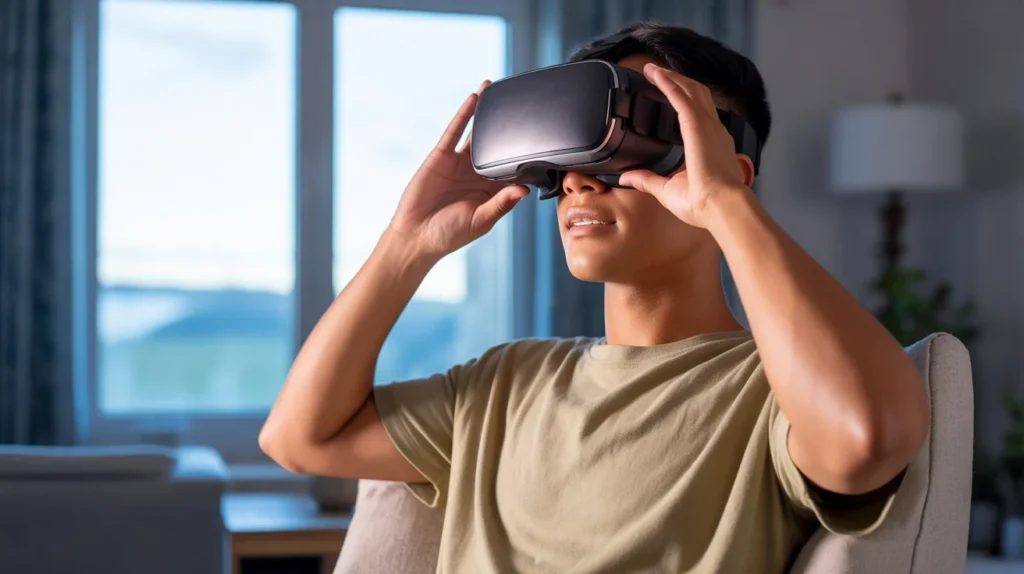
Every 20 minutes:
This relaxes your focusing muscles.
If you’re new to VR:
Your visual system adapts over time.
Most headsets allow IPD adjustment.
If the setting doesn’t match your eye spacing:
Proper alignment reduces visual stress significantly.
Immersion decreases blinking rates.
Consciously remind yourself:
Dry eyes are one of the most common VR complaints.
Fatigue amplifies strain.
If you’re sleep-deprived:
Uncorrected vision issues increase strain dramatically.
If you wear glasses:
Most healthy adults tolerate VR well. However, you should be cautious if you:
In these cases, consult an eye care professional before extended VR sessions.
Personalized advice always beats guesswork.
Daily use alone doesn’t equal damage.
But daily overuse without breaks increases strain risk.
If you use VR for gaming, workouts, or work:
Think of VR like exercise for your visual system.
In moderation, it’s manageable.
Without balance, it becomes exhausting.
Blue light gets blamed for many things.
Here’s what matters:
Most VR discomfort comes from visual demand and reduced blinking — not blue light toxicity.
If nighttime use affects sleep:
Sleep quality supports eye health more than blue-light panic ever will.
Part of your concern may be psychological.
VR feels invasive. The device wraps around your face. It isolates you visually.
That intensity can trigger anxiety about damage.
But intensity does not equal harm.
Compare it to:
Your brain adapts quickly once exposure becomes familiar.
So, are VR headsets bad for your eyes?
For most healthy individuals:
VR is a tool. Like any tool, its effect depends on how you use it.
If you ignore breaks, use it for hours without blinking, and never step outside, strain will follow.
If you use it mindfully, your eyes will likely tolerate it just fine.
Current research shows no strong evidence of permanent eye damage in healthy adults. Most symptoms are temporary and related to eye strain.
Not inherently. However, incorrect fit or outdated prescriptions can increase strain. Prescription inserts often improve comfort.
Daily use is not proven harmful, but frequent long sessions without breaks increase eye fatigue.
There is limited long-term research on children. Supervised, time-limited use is generally recommended.
Start with 20-minute sessions and increase gradually if you experience no discomfort.
Technology isn’t slowing down. Virtual reality is expanding into gaming, fitness, education, and even remote work.
You don’t have to choose between innovation and eye health.
You just need awareness.
Use breaks.
Adjust your headset.
Listen to your body.
Schedule regular eye exams.
If you’ve experienced discomfort from VR, don’t ignore it. Reflect on your habits. Make adjustments.
And if you found this guide helpful, share it with someone who’s asked, “Are VR headsets bad for your eyes?”
The more informed you are, the more confidently you can step into virtual worlds — without worrying about your real-world vision.