Physical Address
304 North Cardinal St.
Dorchester Center, MA 02124
Physical Address
304 North Cardinal St.
Dorchester Center, MA 02124


Learn how augmented reality apps for healthcare are transforming patient care and medical training.
Augmented reality (AR) overlays digital information onto the real world. Unlike virtual reality, which immerses you in a fully digital environment, AR enhances what you already see. In healthcare, that means adding 3D anatomical models, real-time patient data, or procedural guidance directly into your field of view.
When you use augmented reality apps for healthcare, you typically access them through:
These applications combine medical imaging (like CT or MRI scans), advanced visualization software, and sometimes artificial intelligence to create interactive, real-time guidance.
The result? You don’t just read data, you see it in context.
Healthcare is complex. Small errors can carry enormous consequences. Training is time-intensive. Patient communication is often misunderstood. AR addresses each of these pain points in ways that traditional systems cannot.
When you implement augmented reality apps for healthcare, you can:
Digital health adoption has accelerated globally. Reports from leading market research firms consistently show rapid growth in the AR healthcare sector, with projections reaching multi-billion-dollar valuations within the next few years. That growth isn’t driven by hype; it’s driven by measurable outcomes.
If you’re responsible for patient care or operational efficiency, AR isn’t optional for long. It’s becoming a competitive advantage.
Surgery is one of the most powerful applications of AR in medicine. Instead of mentally mapping scans to a patient’s body, you can overlay those scans directly onto the surgical site.
With augmented reality apps for healthcare in surgical settings, you can:
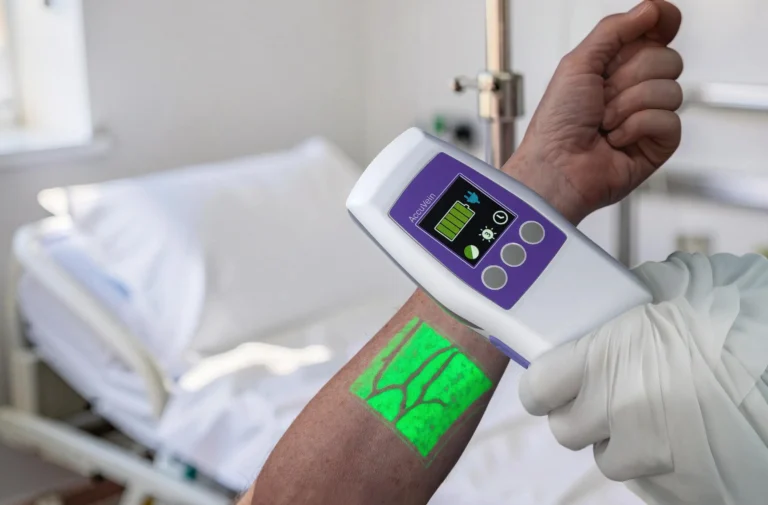
A well-known example is Medivis, which develops holographic surgical planning tools. Another widely recognized solution is AccuVein, which projects vein maps onto the skin to assist with IV insertions.
Studies have shown that AR-assisted navigation can:
If you’re a surgeon, this technology gives you spatial awareness that traditional 2D screens simply can’t match.
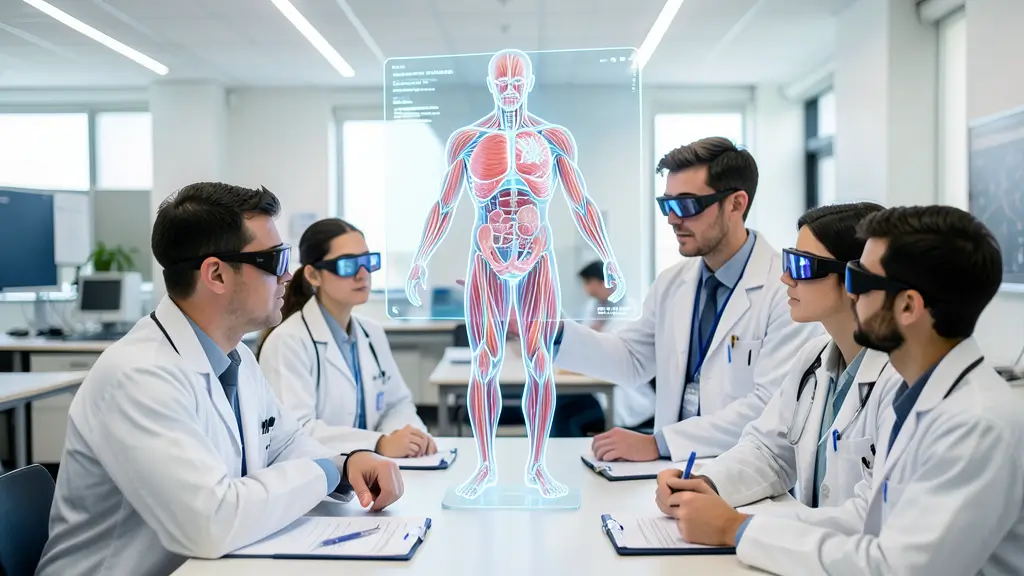
If you’ve ever trained in medicine, you know how steep the learning curve can be. Textbooks flatten anatomy. Cadavers are limited. Simulators are expensive.
Augmented reality apps for healthcare solve these problems by offering interactive, 3D educational experiences. For example, platforms like Touch Surgery provide guided simulations that allow trainees to rehearse procedures step by step.
With AR-based education, you can:
Hardware such as the HoloLens developed by Microsoft has been adopted in medical schools and hospitals worldwide for immersive training.
Benefits you gain include:
If you manage medical training programs, AR gives you flexibility and realism without the traditional constraints.

One of the most overlooked challenges in healthcare is communication. Patients often nod during consultations but leave confused.
Augmented reality apps for healthcare can transform how you explain diagnoses and treatments. Instead of describing a blocked artery, you can show a 3D beating heart with the exact location of the blockage highlighted.
When you use AR for patient education, you help patients:
Research consistently links better health literacy with improved outcomes and higher adherence rates. If your patients truly understand what’s happening in their bodies, they’re more likely to follow through with treatment plans.
For you as a provider, that means fewer misunderstandings, fewer repeat explanations, and better long-term results.
Rehabilitation requires repetition, accuracy, and motivation. Unfortunately, many patients struggle to stay consistent once they leave the clinic.
Augmented reality apps for healthcare can guide patients through exercises at home while providing real-time feedback. Through AR overlays, patients can see whether their posture or movement aligns with the prescribed form.
Key benefits include:
Some clinical studies suggest that AR-guided therapy improves engagement and may shorten recovery time for certain conditions.
If you’re a physiotherapist or rehabilitation specialist, AR extends your supervision beyond the clinic walls.
Finding veins can be challenging, especially in pediatric, geriatric, or dehydrated patients. Failed IV attempts increase discomfort and stress.
Augmented reality apps for healthcare address this by projecting vein patterns directly onto the skin. Devices such as those developed by AccuVein have demonstrated increased first-stick success rates in many clinical settings.
For you, this means:
Diagnostics can also benefit from AR overlays that highlight abnormalities directly on imaging results, making interpretation faster and more intuitive.
You may not immediately associate AR with mental health, but its applications are expanding rapidly.
In therapeutic settings, augmented reality apps for healthcare can support:
By layering controlled digital elements into the real environment, therapists can gradually introduce triggers in a safe, adjustable manner.
For pain management, AR games and immersive visuals redirect attention away from discomfort during procedures. Clinical findings indicate that distraction-based AR experiences can reduce perceived pain levels in some patient populations.
If you’re exploring non-pharmacological interventions, AR offers an innovative complement to traditional therapies.
When you adopt augmented reality apps for healthcare, you can expect measurable operational improvements:
AR tools also streamline workflows by reducing the need to look away from the patient to consult separate monitors.
From the patient’s perspective, the benefits are deeply personal:
If you want your patients to feel heard and informed, AR becomes a bridge between clinical expertise and human connection.
Despite its promise, AR adoption isn’t without obstacles.
You may face:
Budget planning is essential. While long-term ROI can justify investment, upfront expenses may require phased implementation.
Healthcare is heavily regulated. Any augmented reality apps for healthcare must comply with data privacy laws such as HIPAA in the United States or equivalent frameworks globally.
You must also consider:
Careful vendor evaluation and rigorous testing are critical before large-scale deployment.
The trajectory of AR in medicine is accelerating. As AI and machine learning integrate with AR systems, you can expect:
Telemedicine combined with AR could redefine how you deliver care remotely. Instead of verbal instructions alone, you might visually guide a local provider in real time.
If you’re planning for the next five to ten years, AR should be part of your strategic roadmap.
Adoption doesn’t need to be overwhelming. You can follow a structured approach:
Focus on areas where visualization directly improves outcomes, such as surgery, training, or vein access.
Start small. Measure performance indicators like procedure time, error rates, or patient satisfaction.
Even the most advanced augmented reality apps for healthcare require proper onboarding. Ensure clinicians understand both capabilities and limitations.
Track:
Expand only after confirming measurable benefits.
By taking a phased approach, you minimize risk while maximizing learning.
They are used in surgery, medical training, patient education, rehabilitation, mental health therapy, and diagnostic support. You can use them to visualize anatomy, guide procedures, and improve communication.
Yes, when properly tested and approved by regulatory authorities. Safety depends on accurate calibration, data security compliance, and appropriate clinical training.
Costs vary widely. You may spend on hardware, software licenses, and integration. However, long-term gains in efficiency and reduced errors can offset the initial investment.
Absolutely. Mobile-based AR solutions make entry more accessible. You can start with patient education or training modules before moving into advanced clinical applications.
Augmented reality apps for healthcare are not just about technology; they’re about clarity. When you can see what was once hidden, you make better decisions. When your patients can see what you’re explaining, they feel empowered. When your team collaborates through shared digital insight, outcomes improve.
If you’re ready to modernize your practice, now is the time to explore how AR can fit into your strategy. Start with one use case. Measure the impact. Refine your approach. Then scale.
Healthcare is evolving. The question isn’t whether augmented reality apps for healthcare will shape the future. It’s whether you’ll be part of the transformation.
Take the next step, research vendors, request demos, and evaluate how AR can elevate your patient care today.