Physical Address
304 North Cardinal St.
Dorchester Center, MA 02124
Physical Address
304 North Cardinal St.
Dorchester Center, MA 02124


Learn what it takes to become an augmented reality developer, the skills required, and top tools for AR development.
You’ve probably experienced it already. You point your phone at a table, and a 3D chair appears. You try on glasses without stepping into a store. You scan a machine and see live data floating above it.
What feels like magic is actually the work of an augmented reality developer, someone who blends code, design, and spatial thinking to build interactive digital layers on top of the real world.
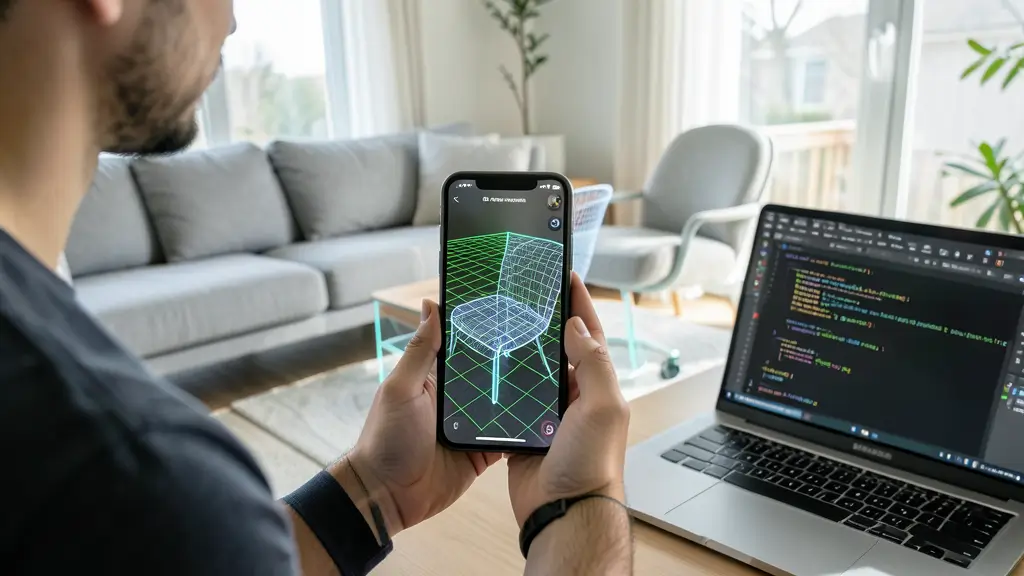
If you’re curious about entering this field in 2026, you’re not too late. In fact, you’re stepping in at a time when demand is expanding across industries. In this guide, you’ll learn exactly how to become an augmented reality developer, what skills you need, how long it takes, and how to position yourself for real opportunities.
Let’s break it down step by step.
Before you commit to the path, you need clarity about the role.
As an augmented reality developer, your job is to create applications that overlay digital elements — 3D models, animations, text, data – onto the physical world through smartphones, tablets, headsets, or smart glasses.
You don’t just write code. You shape interactive spatial experiences.
Depending on your specialization, you may:
You’ll often work with tools like Unity, Unreal Engine, ARKit, and ARCore to bring your projects to life.
This isn’t just about gaming anymore.
You can find augmented reality developers working in:
If you’re looking for a career that combines creativity and technical depth, this field gives you both.
You don’t need to master everything at once. But you do need a structured foundation.
At the core of AR development is programming.
Here’s what you should focus on:
If you’re just starting, C# with Unity is often the most beginner-friendly route.
Game engines are the backbone of AR creation.
With Unity, you’ll learn:
With Unreal Engine, you’ll explore:
Choose one engine first. Go deep before you diversify.
To become a serious augmented reality developer, you must understand how AR frameworks handle:
ARKit (for Apple devices) and ARCore (for Android) dominate mobile AR development. If you want cross-platform flexibility, Unity bridges both.
AR isn’t flat like web design. You’re building in three dimensions.
You should understand:
Even if you don’t become a 3D artist, understanding how models behave in space will improve your work dramatically.
Many beginners focus only on code. That’s a mistake.
In AR, user experience is everything.
Ask yourself:
The best augmented reality developers think like designers, not just engineers.

Let’s turn this into a practical plan you can follow.
Start with fundamentals:
Build small projects like:
Consistency matters more than speed.
Install Unity and begin experimenting.
Start with:
Then move to:
Don’t just watch tutorials. Build variations of what you learn.
Now connect your engine to AR frameworks.
Practice building:
Focus on:
At this stage, your skills start becoming job-ready.
Your portfolio is more important than certificates.
Include:
Explain the problem each project solves. Recruiters care about practical thinking.
When applying for AR developer roles:
You can also explore freelancing platforms for small AR projects to gain real-world experience.
There isn’t one correct path.
Benefits:
Drawbacks:
Benefits:
Challenges:
Many successful augmented reality developers combine both approaches, structured online learning plus real-world projects.
Technology moves fast. Staying relevant means adapting.
Artificial intelligence enhances AR through:
If you combine AI knowledge with AR development, you increase your value significantly.
Web-based AR is expanding.
Instead of downloading apps, users access AR experiences directly in their browsers. This reduces friction and increases adoption in marketing and e-commerce.
If you learn JavaScript-based AR frameworks, you open new doors.
Smart glasses and mixed-reality headsets are gaining traction in enterprise environments.
Industries like manufacturing and logistics are adopting AR for:
Positioning yourself early in this space can give you an advantage.
Salaries vary depending on region and experience.
Typically:
Freelancers may charge hourly rates depending on complexity and expertise.
Because AR combines multiple disciplines, programming, 3D graphics, UX, companies often pay above-average tech salaries for strong candidates.
If you want to stand out, avoid these pitfalls:
Depth beats quantity. One polished project is better than five unfinished ones.
Your timeline depends on your background.
If you’re starting from scratch:
If you already know programming:
If you’re switching careers:
What matters most is consistent daily practice.
No. While a degree helps, many augmented reality developers are self-taught. Employers prioritize skills and portfolios over formal education.
Yes. With AR expanding across retail, healthcare, education, and enterprise solutions, demand continues to grow. You’re entering a field with long-term potential.
Start with C# and Unity. It offers strong documentation, community support, and cross-platform capability.
Compensation depends on location and experience, but AR developers often earn competitive tech salaries due to their specialized skill set.
Becoming an augmented reality developer in 2026 isn’t about chasing hype. It’s about building practical skills that blend creativity and engineering.
If you:
You can position yourself in one of the most innovative fields in tech.
The opportunity is real. The tools are accessible. The learning resources are everywhere.
Now the decision is yours.
Start small. Build something simple this week. Publish it. Improve it. Repeat.
And if you’re serious about becoming an augmented reality developer, commit today to your first project, because the future won’t wait for you to feel ready.