Physical Address
304 North Cardinal St.
Dorchester Center, MA 02124
Physical Address
304 North Cardinal St.
Dorchester Center, MA 02124
Learn what mixed reality is, how it works, and why it matters in 2026. Explore real-world uses, MR devices, benefits, and the future of MR technology.
Technology rarely changes overnight. Yet every so often, a new innovation appears that shifts how you interact with the digital world. Smartphones did it. Cloud computing did it. Now, a new technology is beginning to transform how you experience both digital and physical spaces at the same time.
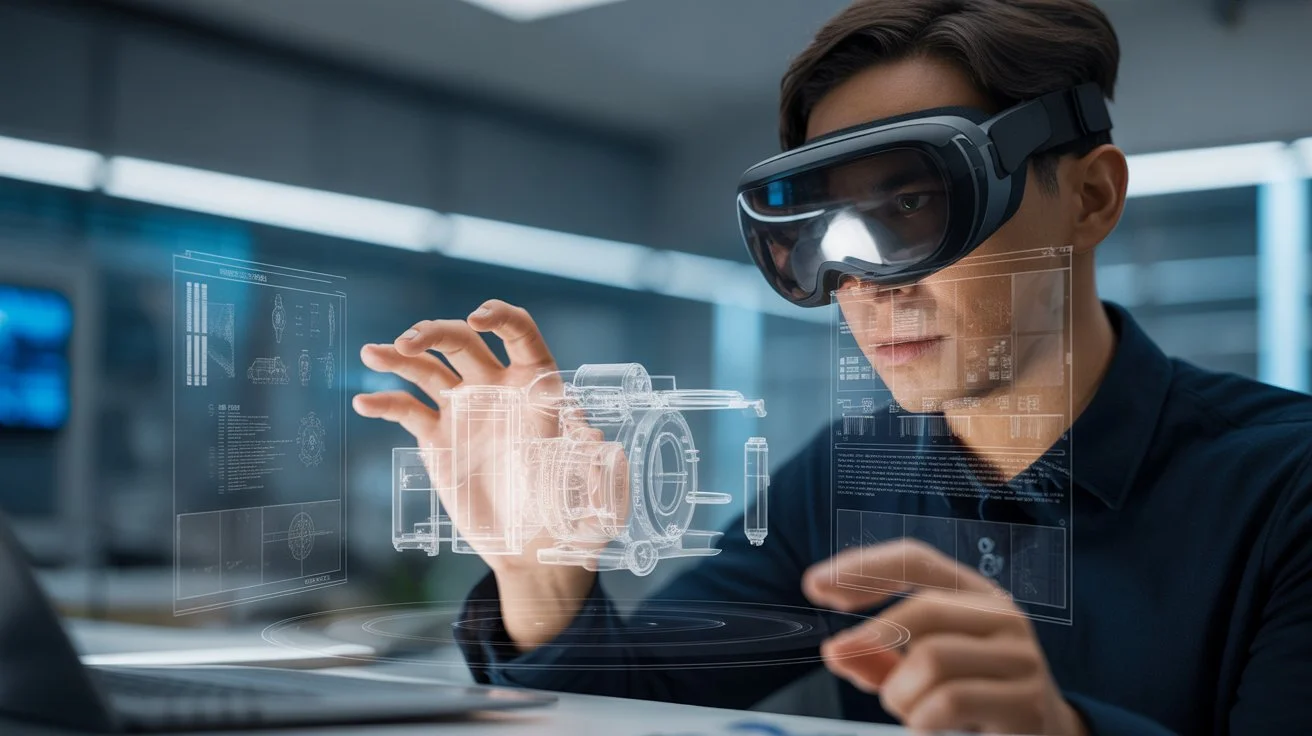
Imagine sitting at your desk and seeing a life-size 3D model floating in front of you. You walk around it, zoom into tiny components with your hands, and collaborate with someone thousands of miles away who can see the same object. You are still in your real environment, but digital elements behave as if they belong there.
That experience is called mixed reality.
Mixed reality is part of a broader technological movement often referred to as extended reality (XR). It blends the physical world with interactive digital content, allowing you to interact with holograms, data, and virtual tools as if they exist in your surroundings. From gaming and education to medicine and engineering, it is rapidly changing how people learn, design, and collaborate.
In this guide, you will discover what mixed reality is, how it works, where it is already being used, and why many experts believe it could become one of the most important computing platforms of the next decade.
Often abbreviated as MR, is a technology that merges the real world with computer-generated elements so that both environments interact with each other in real time.
Unlike traditional digital displays such as computer monitors or smartphones, mixed reality places digital content directly into your physical environment. These digital objects can respond to surfaces, walls, lighting conditions, and even your movements.
According to Microsoft, mixed reality combines physical and digital worlds to create environments where people and digital objects coexist and interact. This concept builds on advancements in computer vision, spatial mapping, and artificial intelligence.
To understand mixed reality clearly, it helps to look at how it fits within the extended reality spectrum.
Virtual reality places you entirely inside a digital environment. When wearing a VR headset, you cannot see the real world. Everything around you is computer-generated.
Popular VR headsets include devices such as Meta Quest 3.
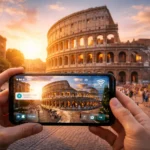
Augmented reality overlays digital information on top of the real world. However, the digital objects usually remain simple overlays and do not interact deeply with physical surfaces.
A well-known example is the mobile AR game Pokémon GO.
Mixed reality goes further by allowing digital objects to understand and interact with the physical world. Virtual objects can sit on tables, hide behind walls, or respond to your gestures.
In other words, it creates an environment where digital and physical elements behave as part of the same space.
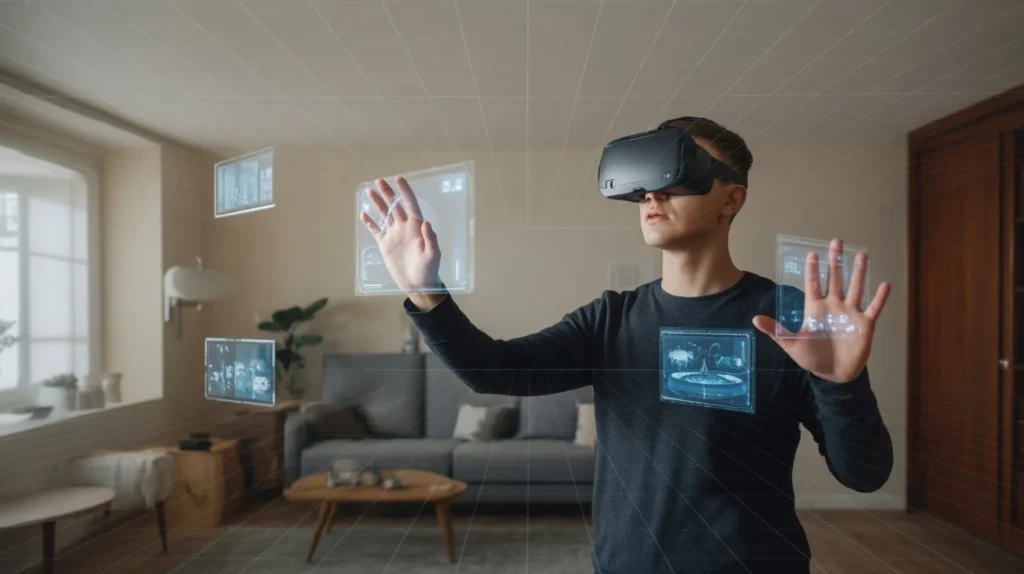
Mixed reality might appear almost magical, but it relies on several advanced technologies working together simultaneously. When you wear an MR headset or use MR-enabled glasses, the device constantly scans and interprets your surroundings.
The system then places digital objects into that environment so they appear stable and interactive.
Several technologies make mixed reality possible.
Spatial mapping allows MR devices to scan and understand the geometry of your environment. Cameras and sensors detect surfaces such as walls, floors, and furniture.
The system then builds a 3D map of your surroundings, enabling digital objects to appear anchored in physical space.
Depth sensors measure the distance between objects and the device. This information helps the system understand how far away surfaces are, ensuring digital elements appear in correct positions.
Computer vision enables devices to interpret visual information from the real world. Using machine learning algorithms, the system can recognize objects, track movement, and adjust digital content accordingly.
Once the environment is mapped, powerful processors generate realistic 3D graphics in real time. These graphics respond instantly as you move or interact with digital objects.
Many MR devices allow you to control digital content using hand gestures instead of traditional controllers. Cameras track your hands and translate movements into commands.
This interaction style makes mixed reality feel natural because you interact with digital objects as if they were physical items.
MR experiences require specialized hardware designed to combine sensors, displays, and computing power into a wearable device.
Several advanced headsets are currently driving the development of mixed reality technology.
One of the earliest enterprise-focused MR devices is the Microsoft HoloLens 2. The headset uses transparent lenses that allow you to see both real and digital objects simultaneously.
Another example is Magic Leap 2, a device widely used in industrial training and medical visualization.
More recently, spatial computing headsets such as Apple Vision Pro have introduced high-resolution displays and advanced eye-tracking technology designed to create immersive MR environments.
These devices include several built-in components:
All these elements work together to create stable digital content that blends naturally with your physical surroundings.
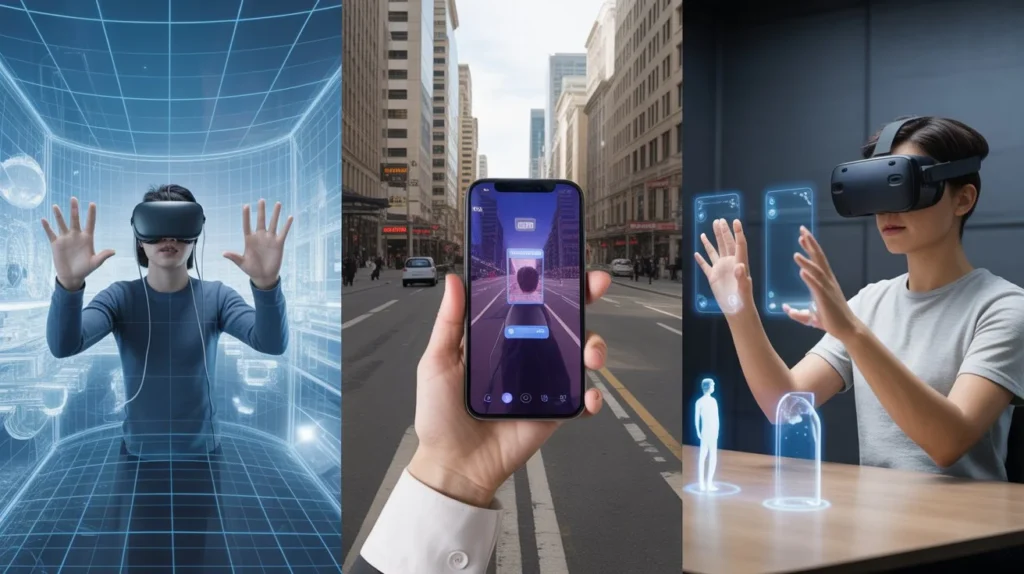
Many people confuse mixed reality with virtual reality or augmented reality. Although they are related, they provide very different experiences.
Virtual reality immerses you in a completely digital environment.
Characteristics include:
Augmented reality overlays digital information onto the real world.
Common features include:
It blends both environments in a deeper way.
Key features include:
This deeper level of interaction is what makes mixed reality especially powerful for professional applications.
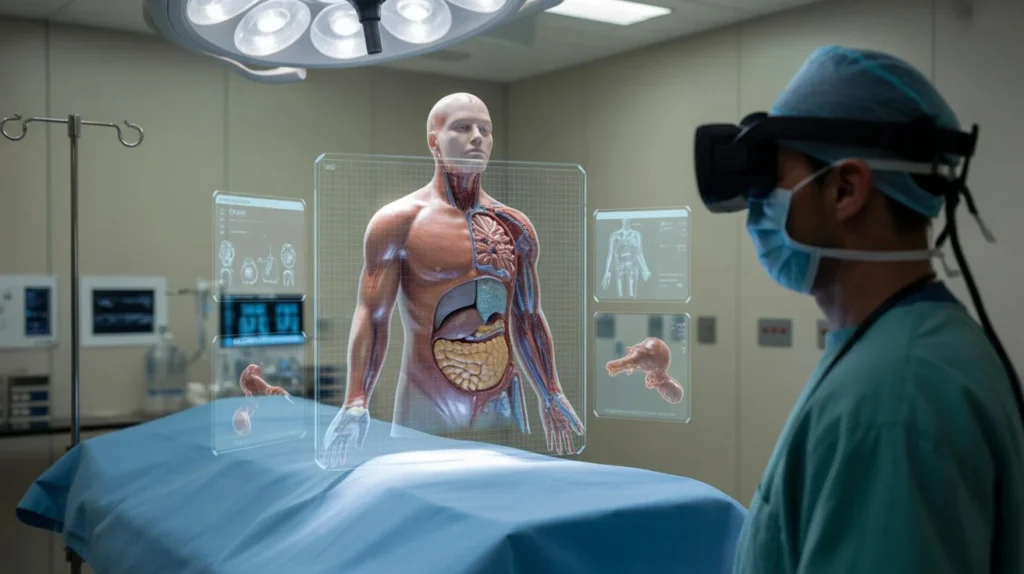
Mixed reality is no longer limited to research laboratories. Many industries are already using the technology to improve training, collaboration, and visualization.
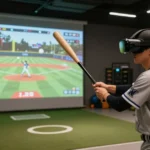
The entertainment industry was one of the earliest adopters of immersive technology. Mixed reality adds a new dimension to gaming by merging digital characters with real-world environments.
Imagine playing a strategy game where the battlefield appears on your living room table or a puzzle game where virtual objects interact with your furniture.
Game developers are exploring MR experiences that blend physical and digital gameplay in ways that traditional screens cannot replicate.
Healthcare is one of the most promising areas for mixed reality.
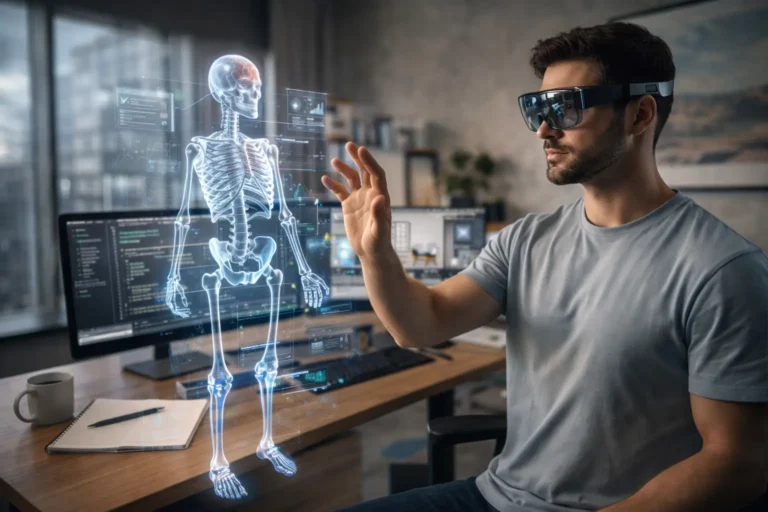
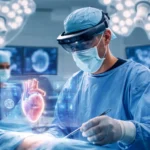
Doctors and medical students can use MR to visualize complex anatomy in three dimensions. Instead of looking at flat medical images, you can walk around a holographic model of the human body.
Applications include:
Some hospitals already use mixed reality to prepare for complicated surgeries by projecting patient-specific 3D models derived from medical scans.
Mixed reality is also transforming education by making learning more interactive.
Instead of reading about a concept in a textbook, you can explore it in three dimensions.
For example, students might:
These immersive experiences can improve understanding by turning abstract concepts into visual and interactive lessons.
Industries such as aerospace, automotive design, and industrial manufacturing benefit greatly from mixed reality.
Engineers can visualize complex machines as full-scale holograms before building physical prototypes.
Applications include:
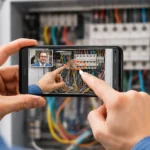
For example, a technician repairing machinery might see step-by-step holographic instructions directly on the equipment they are working on.
This reduces errors and improves efficiency.
Mixed reality offers several advantages compared with traditional digital interfaces.
Complex data becomes easier to understand when displayed in three dimensions. Engineers, architects, and doctors can analyze detailed models that would be difficult to interpret on a flat screen.
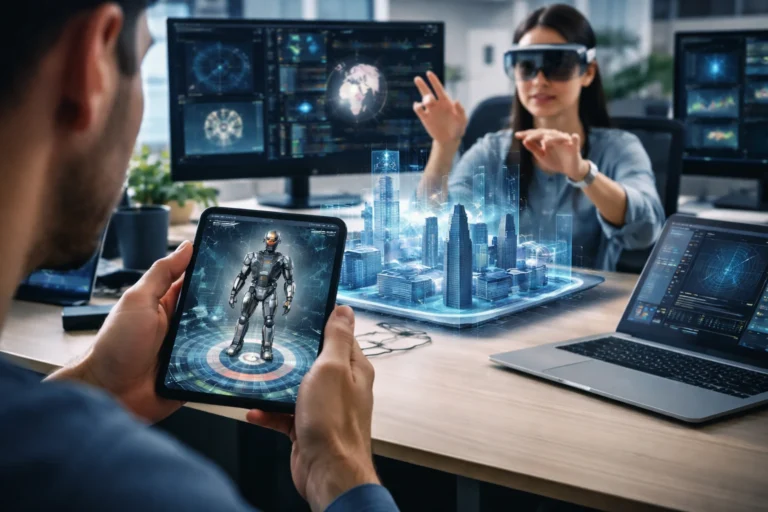
Mixed reality allows multiple people to interact with the same digital objects, even if they are located in different parts of the world.
You and your colleagues can view and manipulate a shared 3D model as if it were sitting on the same table.
Training simulations can replicate real-world environments while remaining safe and cost-effective.
Workers can practice dangerous procedures without real risk.
When instructions appear directly in your field of view, you spend less time switching between manuals, screens, and equipment.
This contextual guidance can significantly reduce mistakes and training time.
Although MR technology is advancing rapidly, several challenges still affect widespread adoption.
High-end mixed reality headsets remain expensive compared with consumer electronics such as smartphones.
Many enterprise MR devices cost several thousand dollars, which limits access for smaller organizations.
Mixed reality devices require substantial processing power, which can drain batteries quickly. Long usage sessions may require external power solutions.
Some MR headsets have a limited viewing area for digital content, which can reduce immersion.
Manufacturers are continuously improving display technology to address this issue.
While the number of MR applications is growing, the ecosystem is still developing compared with established platforms like smartphones or PCs.
Developers are gradually building tools and applications designed specifically for spatial computing.
Mixed reality is still in its early stages, but rapid technological progress suggests significant growth ahead.
Several trends are shaping the future of this technology.
Next-generation MR glasses are expected to become smaller, lighter, and more comfortable to wear for long periods.
Many technology companies are working on designs that resemble normal eyeglasses rather than bulky headsets.
Artificial intelligence will play an increasingly important role in mixed reality systems.
AI can help devices understand environments more accurately, recognize objects, and provide context-aware information.
The concept of spatial computing, interacting with digital information in three-dimensional space, is becoming a major focus for technology companies.
Devices such as Apple Vision Pro are designed around this idea, enabling users to control digital interfaces using eye movements, gestures, and voice commands.
As hardware improves and costs decrease, mixed reality will likely expand beyond enterprise use into consumer markets.
Future applications may include:
The long-term vision is a world where digital information seamlessly integrates with everyday life.
Mixed reality is a technology that blends the real world with digital elements that can interact with physical objects in real time. Instead of simply overlaying images, mixed reality allows virtual objects to behave as if they exist in your environment.
Augmented reality usually adds simple digital overlays to the real world. Mixed reality takes this further by allowing digital objects to understand surfaces, respond to gestures, and interact with physical environments.
Several devices support mixed reality experiences, including:
These devices combine sensors, cameras, and advanced processors to merge digital and physical environments.
Many technology researchers believe mixed reality could become an important computing platform because it enables more natural interaction with digital content. Instead of interacting through screens, you can manipulate digital objects directly within your environment.
Mixed reality represents a significant shift in how you interact with technology. Blending digital content with the physical world, it enables experiences that were once limited to science fiction.
Whether you are designing complex machinery, learning about human anatomy, or collaborating with colleagues across the globe, mixed reality opens new ways to visualize and interact with information.
The technology still faces challenges such as hardware cost and limited software ecosystems, but ongoing advances in sensors, displays, and artificial intelligence are rapidly improving its capabilities.
If you want to stay ahead in a world increasingly shaped by immersive technology, now is the time to start exploring mixed reality. Learn about the devices, follow developments in spatial computing, and consider how this technology might transform the way you work, learn, and create.
If this guide helped you understand mixed reality, consider sharing it with others interested in emerging technologies or exploring more resources about virtual and augmented reality. The future of immersive computing is only beginning, and you are now one step closer to understanding it.