Physical Address
304 North Cardinal St.
Dorchester Center, MA 02124
Physical Address
304 North Cardinal St.
Dorchester Center, MA 02124

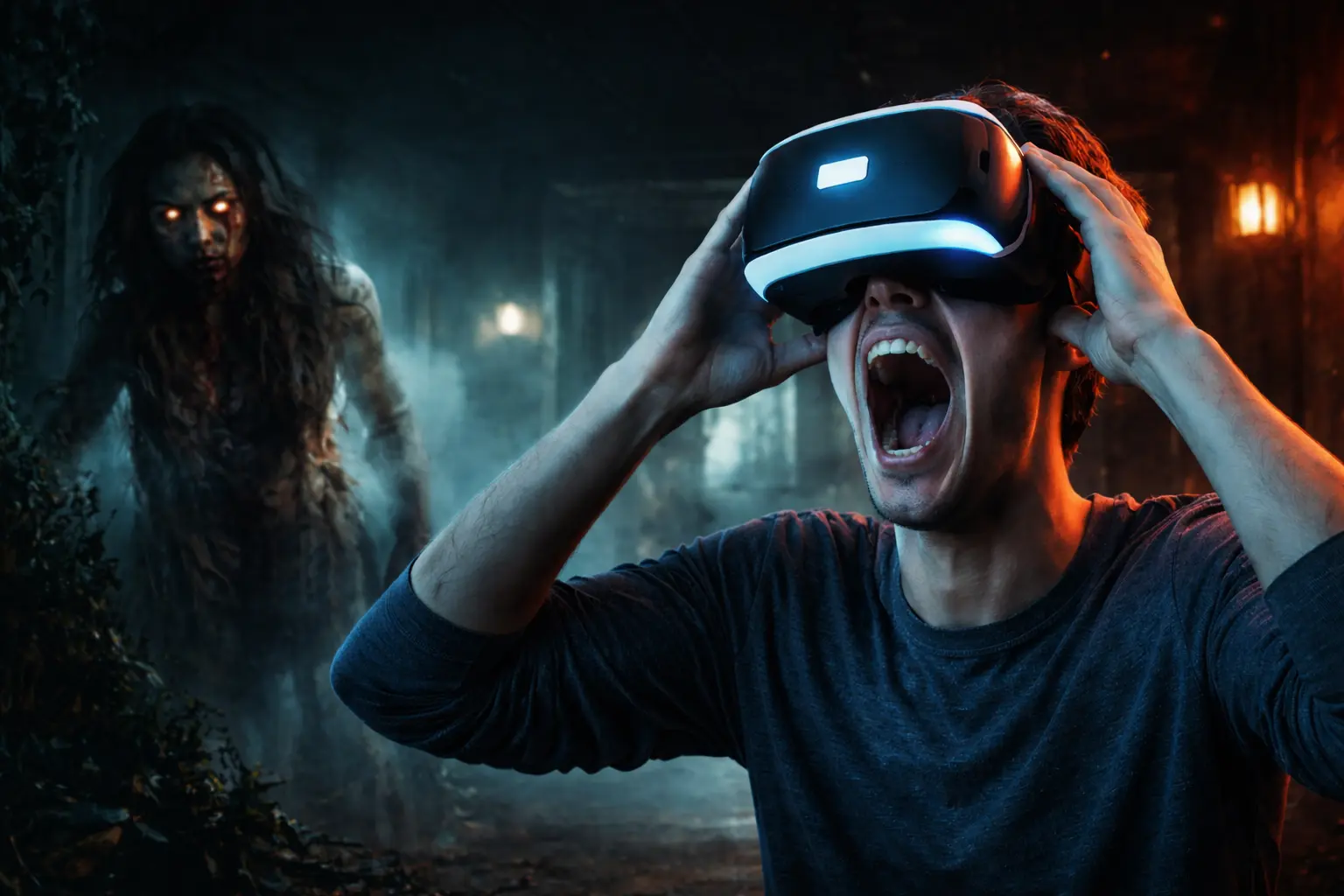
Understand why PS4 VR horror games are so intense and immersive, and how virtual reality enhances fear and atmosphere.
You already know what it feels like to play a horror game late at night. The lights are off. The volume is up. Every small sound makes you glance over your shoulder. Now imagine removing the screen between you and the terror. Imagine stepping inside that hallway instead of watching it from a couch.
That’s what PS4 VR horror games do differently.
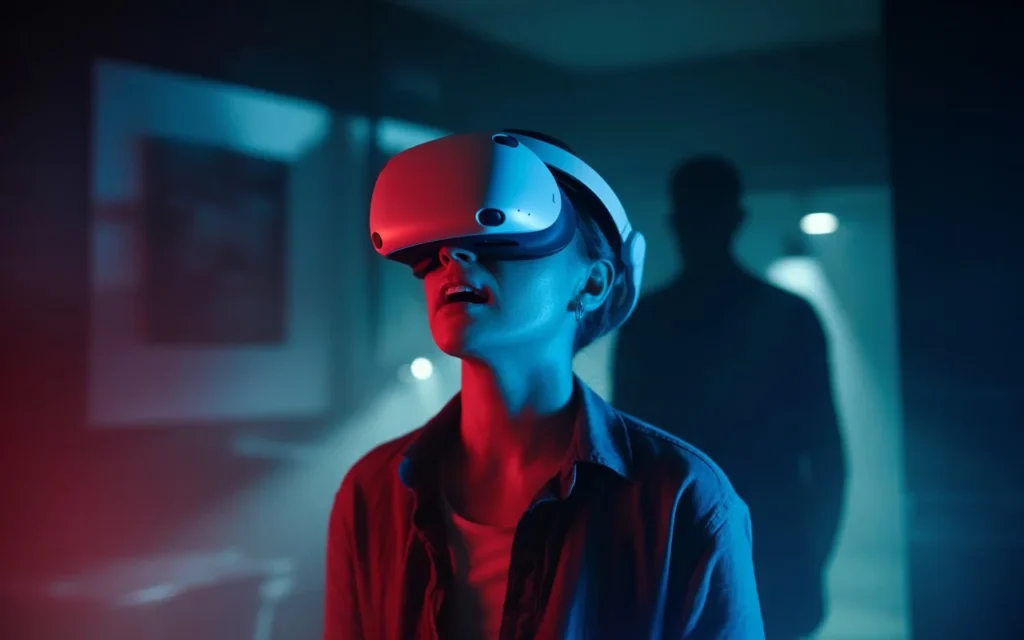
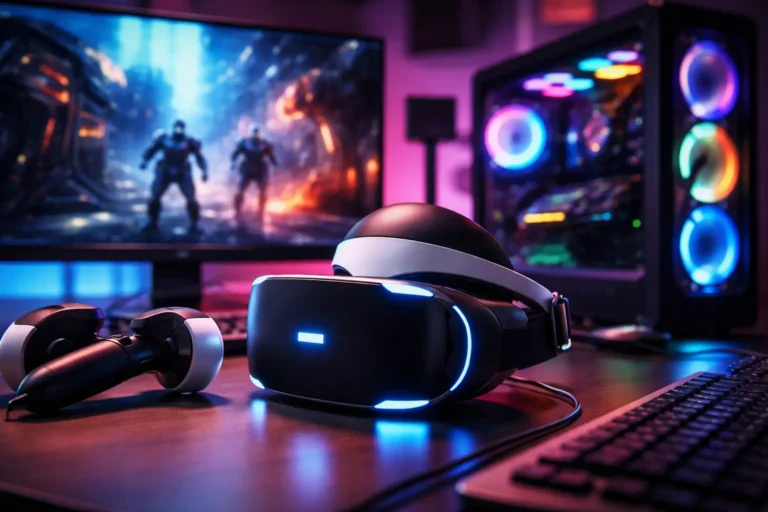
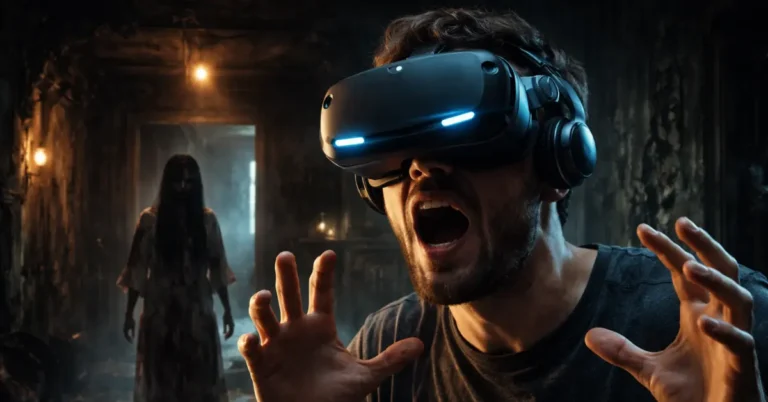
When you put on the PlayStation VR headset, the distance between you and the nightmare disappears. You don’t guide a character through fear, you stand in it. And that shift changes everything about how horror works.
In this guide, you’ll discover what truly defines a VR horror game on PS4 and why virtual reality makes fear feel more intense, personal, and unforgettable.
Not every horror game qualifies as a true VR horror experience. A game doesn’t become terrifying just because you strap on a headset. Certain design choices, technical elements, and psychological triggers must work together.
Here’s what sets PS4 VR horror games apart.
A genuine VR horror game isn’t just a traditional title with a VR mode bolted on. It’s built to function inside a 360-degree environment.
When you play in VR on PS4, you experience:
The PlayStation VR headset offers roughly a 100-degree field of view along with 3D spatial audio support. That combination creates a sense of presence — the feeling that you are physically located inside the game world.
Unlike flat-screen horror games, you can’t rely on camera tricks alone. If something moves behind you, you must physically turn to see it. That simple mechanic increases tension instantly.
In many traditional horror games, combat plays a central role. You fight monsters. You gather weapons. You grow stronger.
In PS4 VR horror games, power is often limited. Vulnerability becomes the core design choice.
You’ll usually find:
Take Resident Evil 7 in VR mode. Even if you’ve played it on a standard screen, the VR version feels entirely different. Tight hallways feel narrower. Enemies appear closer. The tension lingers longer because you feel physically trapped in the space.
Horror works best when you feel exposed. VR amplifies that exposure.
Sound design becomes far more important in virtual reality.
In PS4 VR horror games, you experience:
When you hear a floorboard creak behind you, your instinct is to turn around immediately. Your brain reacts before logic steps in.
Research in virtual reality psychology shows that immersive audio significantly increases emotional engagement. In horror, that translates to elevated heart rate and heightened alertness.
You’re not just hearing the sound. You’re reacting to it as if it were happening nearby.
You might wonder: why does VR change horror so dramatically?
The answer lies in how your brain processes immersive environments.
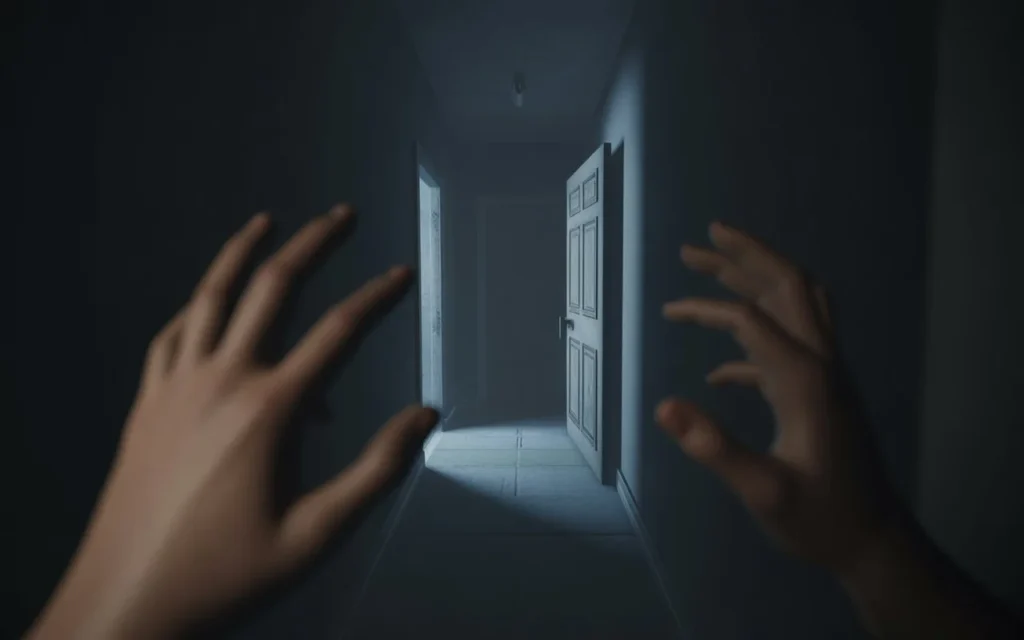
When you play a standard horror game, your brain understands that the danger exists on a screen. There’s a mental buffer. You’re watching events unfold.
VR removes that buffer.
Psychologists call this sensation “presence” — the subjective feeling of being inside a virtual space. When presence increases, your brain responds to virtual threats as though they are physically real.
In practical terms, that means:
The headset blocks your peripheral vision from the real world. Your senses focus entirely on the virtual environment. That sensory isolation intensifies fear in a way flat gaming cannot replicate.
On a television, horror is framed. You observe it through a rectangle.
In VR, there is no frame.
Here’s how that difference plays out:
| Traditional Horror Games | PS4 VR Horror Games |
|---|---|
| Fixed screen perspective | 360° environment |
| Detached camera control | Head-based perspective |
| External observation | Embodied experience |
| Lower physiological response | Higher stress reaction |
In VR, if something approaches you, it feels close. Personal. Immediate.
You cannot glance away casually. You must physically turn your head. That involvement forces engagement, and engagement fuels fear.
Motion controls add another layer of intensity.
Instead of pressing a button to reload, you might:
These actions slow you down. They make you deliberate. And in horror, hesitation breeds anxiety.
When you fumble during a tense moment, it doesn’t feel like a gameplay mechanic. It feels like panic.
That’s why VR horror often leaves players needing breaks between sessions. The experience demands emotional energy.
Beyond psychology, hardware plays a crucial role in shaping the experience.
Developers designing for PlayStation VR must consider scale, lighting, and spatial awareness carefully.
Effective PS4 VR horror games often include:
When a room feels realistically scaled, you instinctively measure distances. A creature standing at the end of a hallway doesn’t look like a character model — it looks like something occupying space in front of you.
Lighting also becomes more powerful. Shadows conceal movement. Flickering lights create uncertainty. Your eyes scan constantly for motion.
Performance is not just about smooth gameplay. In VR, it determines immersion quality.
PlayStation VR operates with reprojected frame rates to maintain fluid motion. Stable performance ensures:
If the experience stutters, your brain recognizes the artificiality of the environment. That recognition weakens fear.
Smooth performance keeps you anchored in the illusion.
To understand what defines the genre, you can look at standout examples.
This title is often cited as one of the most intense VR horror experiences available on PS4. The shift from third-person entries in the series to first-person VR dramatically increased immersion.
This game shows how controlled movement can reduce motion sickness while still delivering high-impact fear moments.
Unpredictability is a powerful horror tool. When environments change, you can’t memorize safety routes.
Each of these titles demonstrates different approaches to immersive horror design.
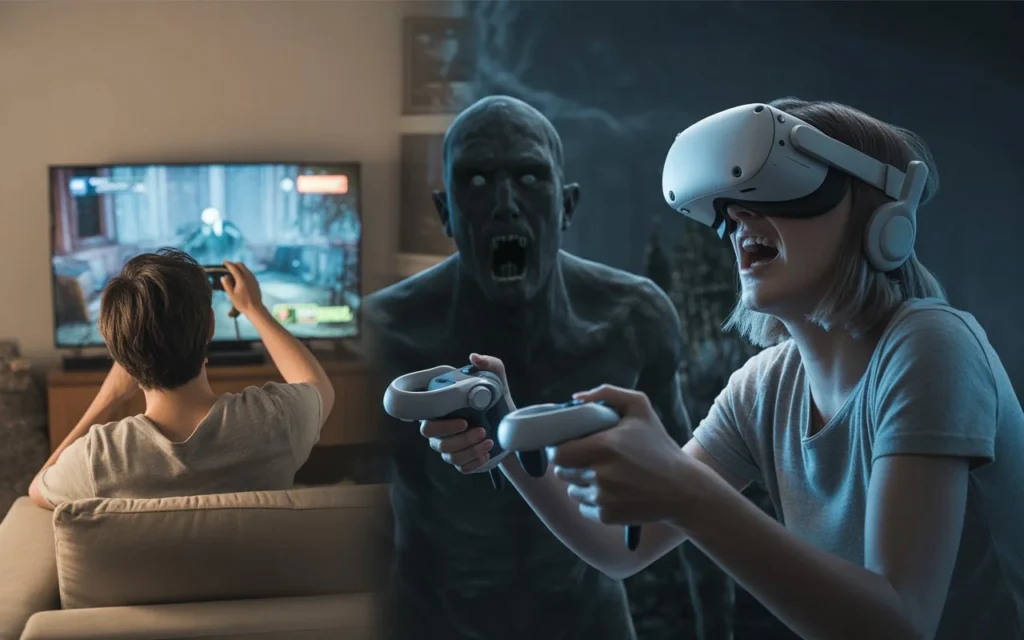
While both formats aim to scare you, the delivery method changes everything.
With a headset on and headphones covering your ears, the outside world fades.
You don’t see your room.
You don’t notice your phone lighting up.
You don’t glance away during tense moments.
That isolation heightens vulnerability.
In standard games, your character absorbs the danger. You remain separate.
In VR, the threat feels directed at you.
When an enemy locks eyes with your viewpoint, it feels confrontational. Eye contact in VR can be deeply unsettling because it feels mutual.
| Feature | Traditional Horror | PS4 VR Horror Games |
|---|---|---|
| Immersion Level | Moderate | Extremely High |
| Player Detachment | Present | Minimal |
| Fear Trigger | Audio & Visual | Audio, Visual & Physical |
| Lingering Impact | Short-term | Often Memorable |
Many players report that VR horror scenes stay with them longer. The memory feels closer to lived experience than gameplay footage.
Even though PS4 hardware has limits, VR horror continues to evolve.
You can expect:
As developers refine motion design and comfort systems, VR horror will likely become even more accessible while retaining its intensity.
The foundation laid by PS4 VR horror games continues to influence modern virtual reality development.
They eliminate the psychological barrier between you and the threat. The 360-degree immersion and head-tracked perspective create a stronger sense of presence, which increases emotional intensity.
Yes. Authentic PS4 VR horror games require the PlayStation VR headset and compatible accessories to function properly.
Some titles are more accessible than others. Games with guided movement systems, like Until Dawn: Rush of Blood, can serve as entry points. However, you should expect higher intensity compared to traditional horror games.
It can, especially if frame rates drop or movement mechanics are not optimized. Taking breaks and adjusting comfort settings can help reduce discomfort.
When you step into virtual reality, horror stops being entertainment at a distance. It becomes participation.
You don’t watch shadows stretch across the hallway.
You stand in that hallway.
You don’t hear footsteps through speakers.
You turn toward them instinctively.
That shift from observer to participant defines the genre. PS4 VR horror games transform familiar horror mechanics into something more immediate and emotionally charged.
If you’ve never tried one, you’re missing a version of horror that feels closer to lived experience than digital fiction.
If you already own a PS4 and a PlayStation VR headset, now is the perfect time to explore what VR horror truly offers. Start with a critically acclaimed title, dim the lights, wear quality headphones, and allow yourself to experience the genre as it was designed.
And if you’re still on the fence, consider this: horror is most powerful when it feels personal. VR makes it personal.
Step in — if you dare.