Physical Address
304 North Cardinal St.
Dorchester Center, MA 02124
Physical Address
304 North Cardinal St.
Dorchester Center, MA 02124

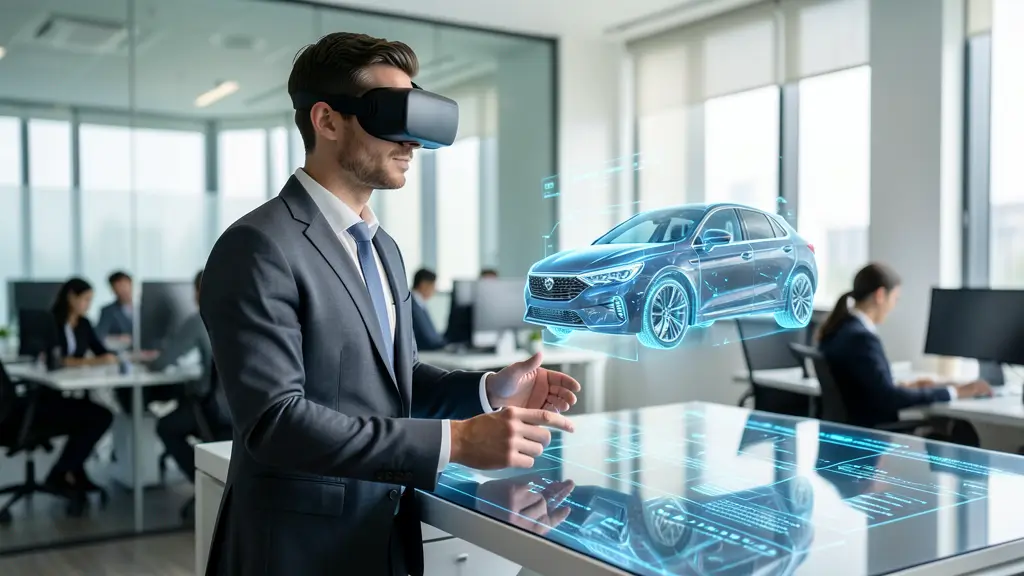
Learn what AR VR companies do to transform businesses with cutting-edge solutions and interactive experiences. Read the full guide on XReality Blog.
There’s a moment every business leader faces: you realize that incremental change is no longer enough. A new website won’t cut it. A few automation tools won’t redefine your customer experience. If you want to compete in a market shaped by digital acceleration, you need something deeper — something immersive.
That’s where AR VR companies come in.
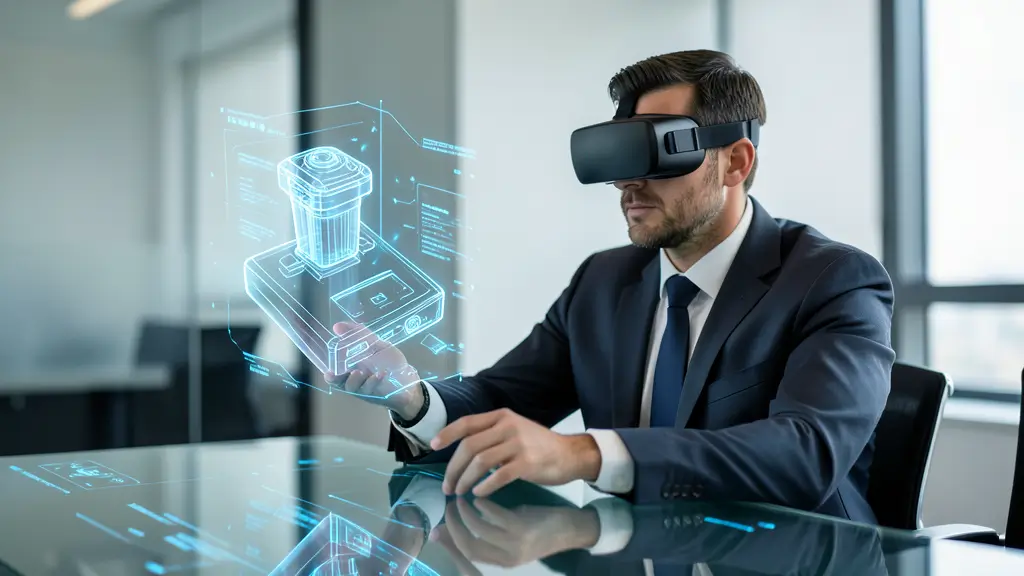
These firms don’t just build flashy tech demos. They help you reimagine how your team trains, how your customers shop, how your products are designed, and how your operations scale. If you’re wondering what AR VR companies actually do — and how they can transform your business — you’re about to see the full picture.
At the most basic level, AR VR companies design and deploy immersive technology solutions. But in practice, their role is far more strategic. They sit at the intersection of business consulting, software development, 3D design, and emerging technology integration.
When you partner with AR VR companies, you’re typically gaining access to:
In other words, they don’t just build experiences — they build ecosystems.
The global AR and VR market continues to grow at a rapid pace, with analysts projecting strong double-digit compound annual growth rates through the end of the decade. That growth isn’t driven by entertainment alone. It’s fueled by enterprise adoption.
Businesses like yours are realizing immersive technology is no longer optional — it’s a competitive advantage.
If you’re investing in immersive technology, you want results. Revenue growth. Higher engagement. Improved conversion rates. The right AR VR companies design solutions specifically to impact your bottom line.
Traditional marketing competes for attention. Immersive marketing captures it.
With AR-powered product visualization, your customers can:
When your audience interacts with your product instead of just viewing it, engagement increases dramatically. Studies consistently show that interactive product experiences improve conversion rates and reduce return rates.
You’re not just telling customers about your product — you’re letting them experience it.
Imagine hosting a global product launch without renting a physical venue. AR VR companies build virtual showrooms where customers walk through digital spaces, interact with products, and connect with sales representatives in real time.
For B2B companies, this shortens sales cycles. For retail brands, it expands reach beyond geography. For you, it means scalable growth.
If you sell complex products — industrial equipment, real estate, architecture services — immersive demos can replace static slide decks.
Instead of showing blueprints, you let prospects walk inside their future building.
Instead of describing machinery, you place them next to it in a virtual environment.
That kind of clarity accelerates trust. And trust accelerates buying decisions.
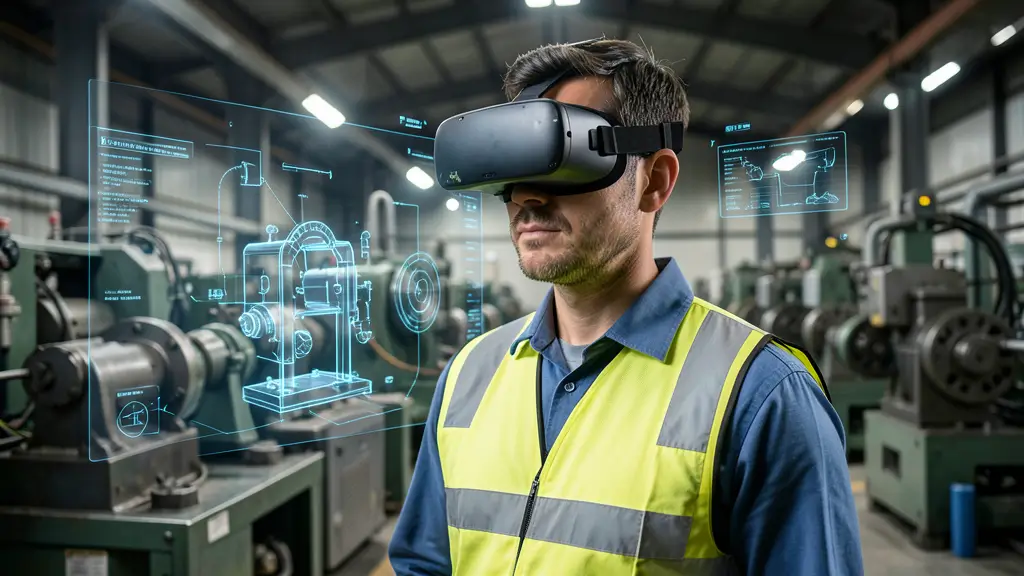
Revenue growth gets attention. Operational efficiency drives long-term profitability.
Many AR VR companies focus heavily on enterprise efficiency because that’s where the largest measurable ROI lives.
Training is expensive. Mistakes are costly. Downtime is disruptive.
VR training simulations solve all three problems.
You can:
Industries like healthcare, aviation, and manufacturing already use VR to reduce errors and accelerate skill acquisition. Research shows immersive training can improve retention rates compared to traditional classroom methods.
If your workforce needs hands-on learning, immersive simulation may be the most practical upgrade you can implement.
You’ve likely adopted video conferencing. But imagine stepping into a shared 3D workspace where your team manipulates prototypes together in real time.
AR VR companies build collaborative environments where:
This reduces travel costs, accelerates feedback cycles, and increases design accuracy.
When your team can interact spatially rather than through flat screens, problem-solving becomes more intuitive.
Immersive technology isn’t one-size-fits-all. The best AR VR companies tailor solutions to your industry’s challenges.
If you operate in healthcare, immersive tools can transform both training and patient care.
Applications include:
The result? Improved clinical outcomes and more confident practitioners.
In retail, customer confidence directly impacts returns and loyalty.
AR VR companies help you:
This bridges the gap between online convenience and in-store experience.
Property buyers often struggle to visualize unfinished spaces. With immersive technology, that problem disappears.
You can provide:
Instead of guessing what a space might look like, your clients experience it before it’s built.
In industrial sectors, AR VR companies often focus on efficiency and safety.
Solutions include:
This reduces downtime and improves decision-making precision.
You may be wondering what powers all of this.
Behind every immersive solution is a carefully built stack of hardware and software.
Depending on your use case, AR VR companies may deploy:
The hardware is selected based on practicality, scalability, and your workforce’s comfort level.
Most immersive applications are built using advanced development engines and cloud infrastructure.
You’ll often see:
The integration layer is just as important as the front-end experience. Your immersive tools must connect with existing business systems — inventory platforms, CRM systems, training databases — to generate measurable value.
The most forward-thinking AR VR companies combine immersive tech with:
If you want scalable innovation, integration matters more than novelty.
Immersive tech without strategy becomes an expensive experiment.
The best AR VR companies start with business outcomes — not hardware.
Before development begins, you should expect:
This staged approach reduces risk and ensures your investment aligns with measurable objectives.
You’ll want to track performance metrics such as:
When AR VR companies focus on analytics from day one, you gain clarity on whether your initiative is working — and where to optimize.
No innovation journey is frictionless. You may encounter obstacles such as:
Experienced AR VR companies mitigate these barriers by:
The goal isn’t just adoption — it’s sustained use.
Immersive technology is evolving quickly. If you’re planning a long-term investment, these trends matter.
Spatial computing blends physical and digital environments seamlessly. Instead of isolated apps, your workspace becomes interactive.
This opens doors for persistent virtual offices, real-time data overlays in factories, and hybrid physical-digital workflows.
While consumer hype fluctuates, enterprise virtual environments continue to grow. Companies are building digital twins of entire operations to simulate supply chains, logistics networks, and infrastructure.
For you, this means smarter forecasting and predictive modeling.
AI-powered avatars, adaptive training modules, and personalized immersive marketing are becoming standard features.
As artificial intelligence integrates deeper into immersive systems, your solutions become smarter over time.
AR VR companies design and implement immersive solutions such as virtual training programs, augmented product visualization tools, digital twins, and remote collaboration platforms that improve revenue, efficiency, and engagement.
They increase ROI by reducing training costs, minimizing operational errors, improving customer conversion rates, shortening sales cycles, and decreasing travel expenses.
No. Many AR VR companies offer scalable solutions for startups and small-to-medium businesses. Web-based AR platforms and modular development models make adoption more accessible than ever.
Costs vary depending on project complexity, hardware requirements, and integration scope. A simple AR marketing campaign will cost significantly less than a full enterprise VR training system. The key is aligning investment with measurable outcomes.
Immersive technology isn’t a novelty anymore. It’s a shift in how you design, train, sell, and operate.
AR VR companies help you move beyond flat screens and static workflows. They give you tools to simulate risk-free environments, showcase products interactively, collaborate in three dimensions, and optimize operations with data-driven insights.
If you want to future-proof your organization, now is the time to explore what immersive transformation looks like for your industry.
Start by identifying one high-impact area — training, marketing, design, or collaboration — and consult with experienced AR VR companies who understand both technology and business strategy.
The organizations that act early won’t just adopt innovation. They’ll define it.
If you’re ready to explore how immersive technology can elevate your business, take the next step. Evaluate your current processes, identify inefficiencies, and begin conversations with AR VR companies who can turn your vision into measurable results.