Physical Address
304 North Cardinal St.
Dorchester Center, MA 02124
Physical Address
304 North Cardinal St.
Dorchester Center, MA 02124

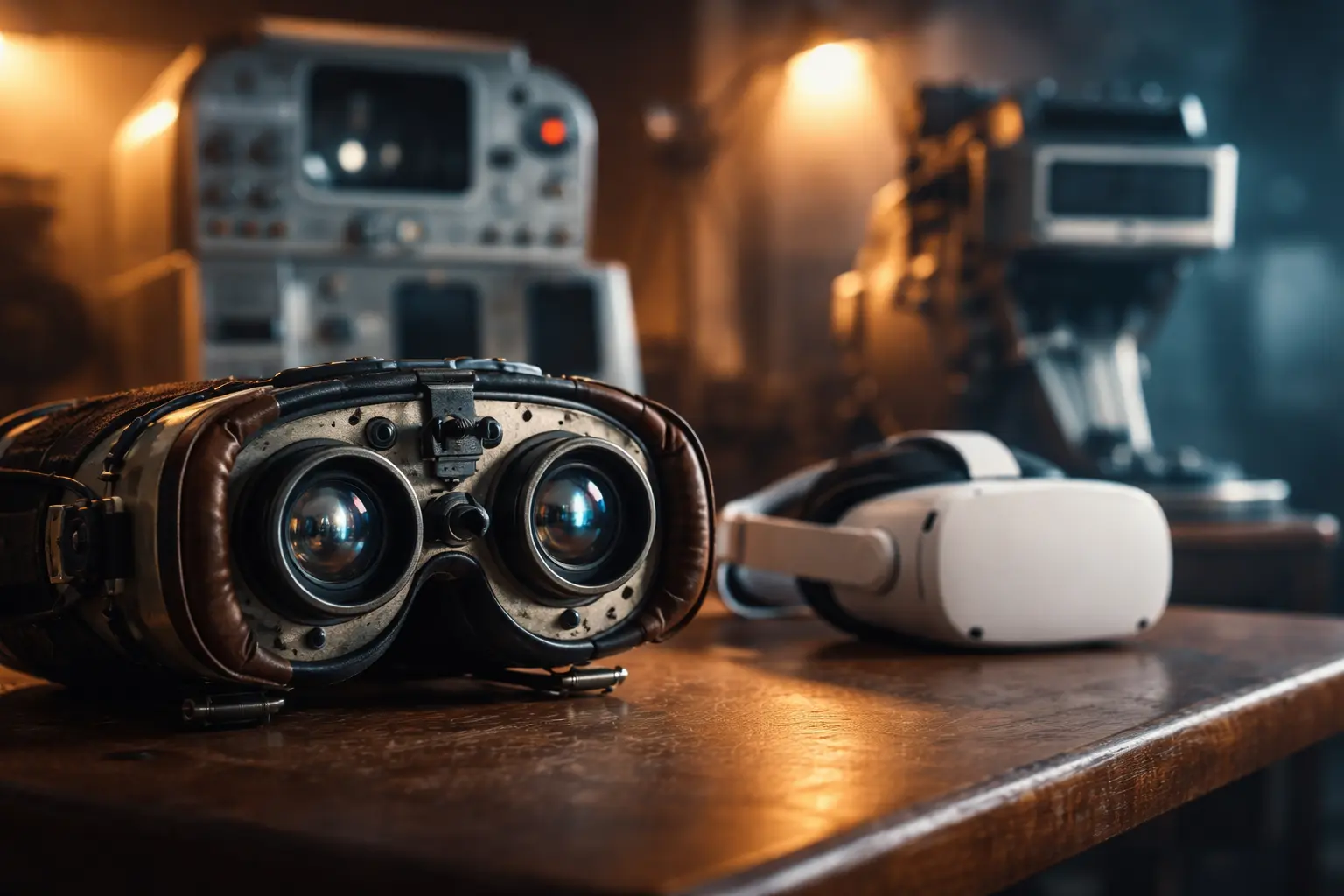
Explore when was VR Invented, and the history behind it key milestones, and how virtual reality evolved over time.
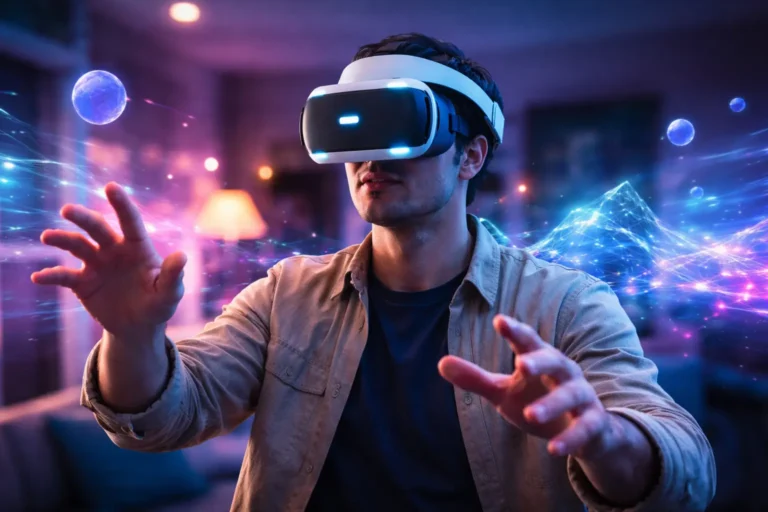
If you have ever worn a virtual reality headset, you probably felt the strange but exciting sensation of stepping into another world. You turn your head, and the environment moves with you. You reach out, and objects respond to your movement. It feels immersive, almost like you have entered a different reality.
But this raises an important question many people ask today: when was VR invented?
You might assume virtual reality is a recent invention that appeared alongside modern gaming technology. In reality, the foundations of VR stretch back more than half a century. Engineers, filmmakers, and computer scientists spent decades experimenting with ways to place people inside simulated environments.
The story of VR is not a single invention or a single moment. Instead, it is a long chain of innovations that gradually built the immersive technology you see today. From mechanical simulators in the 1950s to advanced headsets like the Meta Quest 3 and HTC Vive, virtual reality has evolved through constant experimentation and technological progress.
Understanding when VR was invented helps you appreciate how far this technology has come, and where it might go next.
Before exploring the history of VR, it helps to understand what virtual reality actually means.
Virtual reality is a computer-generated environment designed to simulate physical presence in a digital world. When you use VR, specialized hardware tracks your movements and updates the visual environment in real time, giving you the feeling that you are physically present inside a virtual space.
In simple terms, VR works by convincing your brain that what you see and hear is happening around you.
Most modern VR systems rely on several essential technologies working together:
• Head-mounted display (HMD) – a headset that places screens directly in front of your eyes
• Motion tracking – sensors that follow your head and body movement
• Input devices – controllers or hand-tracking systems that allow interaction
• Spatial audio – sound that changes depending on your position in the virtual environment
When these elements work together, your brain interprets the digital environment as a real place you can explore.
Now that you understand what VR is, you can begin to trace the origins of this technology.
Read more about: Virtual Reality Guide: The Complete 2026 Handbook
The earliest roots of virtual reality appear in the mid-20th century. While computers were still primitive, some inventors were already imagining immersive experiences that could simulate reality.
One of the most important pioneers was filmmaker and inventor Morton Heilig.
In 1956, Heilig created a machine called the Sensorama, often considered one of the earliest devices that resembles virtual reality.
The Sensorama was not a headset. Instead, it looked like a large arcade-style cabinet that you would sit in front of. Once inside, the machine simulated experiences such as riding a motorcycle through a city.
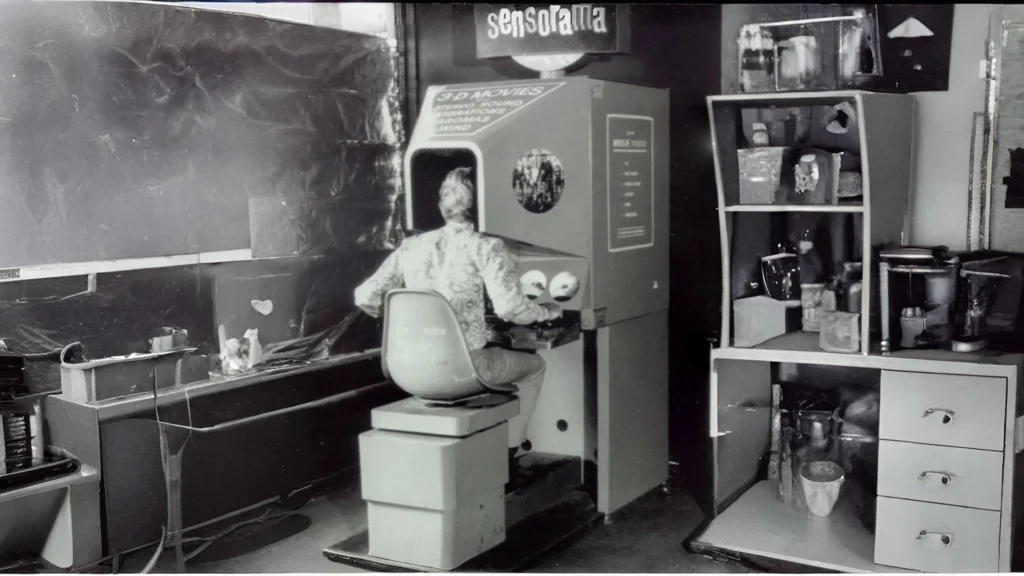
What made it remarkable was the number of senses it attempted to simulate.
The device included:
• 3D stereoscopic visuals
• Stereo sound
• Wind effects
• Vibrations
• Even scent generators
According to historical documentation from the U.S. Patent and Trademark Office, Heilig patented several technologies related to immersive cinema during this period.
Although the Sensorama never became commercially successful, it introduced the idea that technology could simulate real experiences using multiple sensory inputs. This concept later became central to modern VR.
While the Sensorama simulated experiences through a machine, researchers soon began exploring wearable displays that could place virtual images directly in front of a user’s eyes.
In 1960, Morton Heilig developed another invention known as the Telesphere Mask.
The Telesphere Mask is widely regarded as the first head-mounted display (HMD) in the history of virtual reality.
It featured:
• Dual screens for stereoscopic vision
• Stereo audio
• A headset design worn on the head
However, it did not include motion tracking or interactive elements. Users could watch immersive visuals, but they could not interact with the environment.
Despite this limitation, the concept of placing displays directly in front of the eyes later became the standard approach used in modern VR headsets.
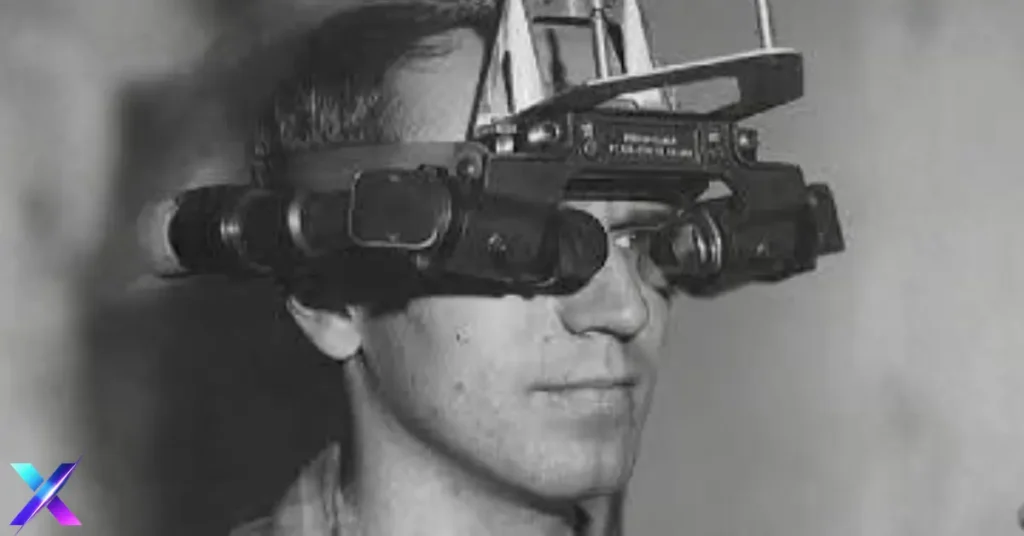
The next major breakthrough came in 1968 when computer scientist Ivan Sutherland and his student Bob Sproull developed one of the first computer-based VR systems.
Their invention became known as the Sword of Damocles.
The system earned its unusual name because it was so heavy that it had to be suspended from the ceiling above the user’s head.
Despite its crude design, the device introduced several key technologies that modern VR systems still rely on:
• Head tracking
• Computer-generated graphics
• Interactive 3D environments
Although the graphics were simple wireframe shapes, the project demonstrated that immersive digital worlds were technically possible.
After these early experiments, virtual reality development began moving into research labs, particularly in government and military institutions.
One of the most significant contributors during this period was engineer Thomas Furness.
Working with the United States Air Force, Furness developed advanced flight simulation systems designed to train pilots using immersive displays.
These simulators introduced technologies that later became essential to VR, including:
• Real-time cockpit displays
• Motion tracking
• Interactive simulations
Organizations such as NASA also began researching immersive environments to train astronauts and visualize complex scientific data.
According to technology archives and research reports, these early simulation systems helped refine the hardware and software needed to build modern VR environments.
Although the public rarely saw these systems, they laid the technical groundwork for future VR development.
While immersive technology existed earlier, the phrase “virtual reality” itself became widely known during the 1980s.
The person most often credited with popularizing the term is computer scientist Jaron Lanier.
Lanier founded the technology company VPL Research in 1984, which focused on developing commercial VR hardware.
The company created several groundbreaking devices, including:
• The DataGlove, which allowed users to control virtual objects with hand movements
• The EyePhone, one of the first VR headsets designed for interactive environments
These inventions introduced the idea that VR could become a practical tool rather than just a research experiment.
Although the equipment was expensive and limited, the work done at VPL Research played a major role in shaping the VR industry.
During the early 1990s, virtual reality briefly captured public attention. Technology companies began exploring whether VR could become a consumer product.
Arcade-style VR machines appeared in some entertainment venues, and several companies attempted to release VR gaming systems.
One of the most famous attempts came from the gaming company Nintendo.
In 1995, Nintendo released the Virtual Boy, a device designed to display stereoscopic 3D graphics for video games.
Although it was marketed as a form of virtual reality, the system had major limitations:
• Red monochrome graphics
• Limited motion interaction
• Uncomfortable viewing experience
As a result, the Virtual Boy was discontinued less than a year after its release.
This period demonstrated an important lesson: VR technology was still not powerful enough to deliver the immersive experience consumers expected.
For nearly a decade afterward, interest in VR slowed significantly.
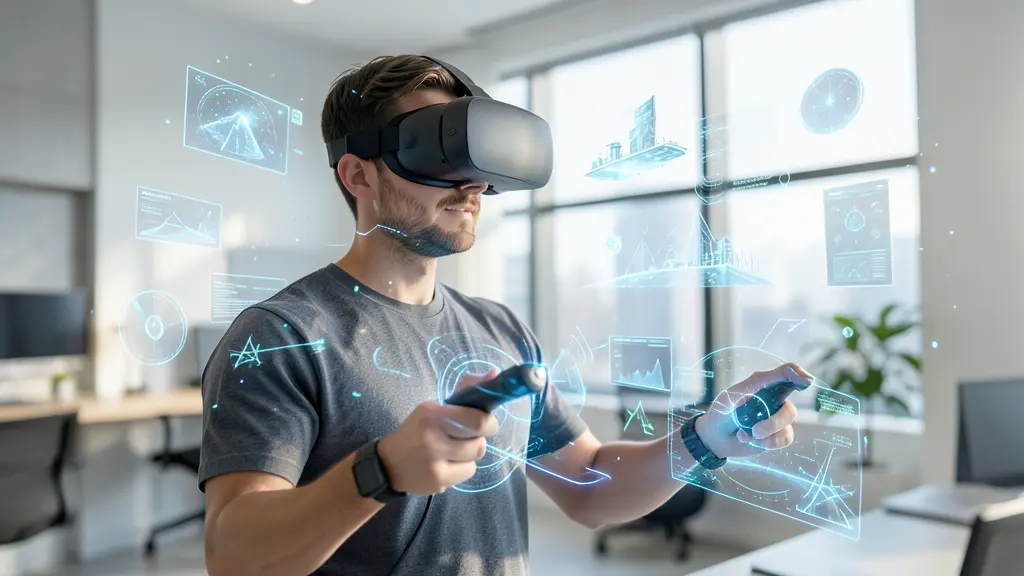
The next major turning point arrived in 2012.
A young inventor named Palmer Luckey launched a prototype headset called the Oculus Rift through a crowdfunding campaign.
The device quickly attracted attention from developers and technology enthusiasts because it offered something earlier VR systems lacked: affordable, high-quality immersion.
In 2014, the company behind the headset, Oculus VR, was acquired by Meta Platforms for approximately $2 billion, according to reports widely covered by major technology publications and financial disclosures.
This acquisition marked the beginning of the modern VR industry.
Soon after, several major companies entered the market.
Important releases included:
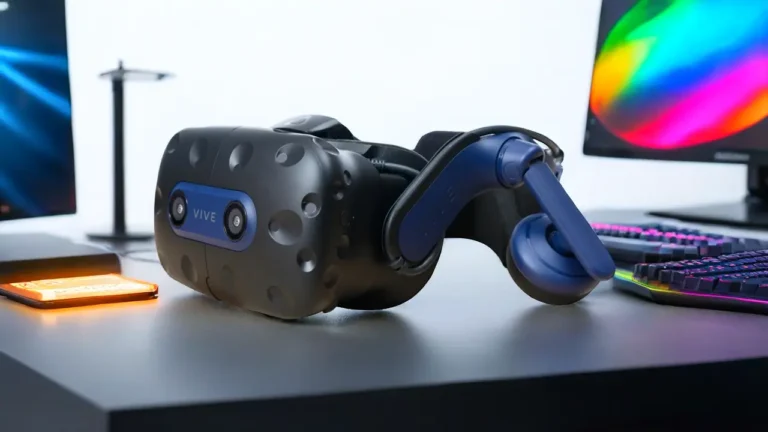
• HTC Vive, developed by HTC and Valve Corporation
• PlayStation VR developed by Sony
• Standalone headsets like the Meta Quest 2 and Meta Quest 3
These devices introduced major improvements:
• High-resolution displays
• Precise room-scale tracking
• Wireless capabilities
• Expanding VR game and application libraries
To better understand the timeline of virtual reality development, consider these important milestones:
1956 – Sensorama was invented by Morton Heilig
1960 – Telesphere Mask, the first VR headset
1968 – Sword of Damocles computer VR system
1984 – VPL Research was founded by Jaron Lanier
1995 – Nintendo Virtual Boy released
2012 – Oculus Rift prototype launches
2016 – Consumer VR headsets like HTC Vive become widely available
Each milestone added a piece to the puzzle that eventually made immersive VR possible.
If VR concepts existed in the 1950s, you might wonder why the technology took so long to reach mainstream users.
Several major barriers slowed progress.
Early computers simply were not powerful enough to render realistic 3D environments quickly.
Building immersive displays and tracking systems required expensive equipment, which limited experimentation.
High-resolution, low-latency screens were not widely available until the 2010s.
Before gaming and digital entertainment expanded, there was little market demand for immersive systems.
Once these challenges began to disappear, VR adoption increased rapidly.
Today, virtual reality continues to evolve quickly.
Technology companies are investing heavily in immersive computing, often combining VR with artificial intelligence, spatial computing, and advanced sensors.
New devices such as the Apple Vision Pro demonstrate how VR and related technologies may expand beyond gaming into everyday productivity and communication.
Industries increasingly using VR include:
• Healthcare training and surgery simulation
• Education and virtual classrooms
• Architecture and design visualization
• Remote collaboration and meetings
• Tourism and cultural heritage experiences
Research reports from organizations like PwC and Gartner suggest immersive technologies could influence many sectors of the global economy in the coming decades.
For you as a user or creator, this means the technology will likely become more accessible, lighter, and integrated into daily life.
So, when was VR invented?
The origins of virtual reality trace back to the 1950s, when pioneers like Morton Heilig first experimented with immersive experiences using machines such as the Sensorama. Over the following decades, researchers like Ivan Sutherland and innovators such as Jaron Lanier pushed the technology forward through new displays, tracking systems, and interactive devices.
What began as experimental machines eventually evolved into the sophisticated VR headsets you see today.
Understanding this long history reveals something important: virtual reality was not invented overnight. It is the result of decades of experimentation, engineering breakthroughs, and technological progress.
If you found this guide helpful and want to learn more about immersive technology, explore our other articles on virtual reality, augmented reality, and emerging digital experiences. The world of immersive tech is expanding quickly, and staying informed will help you understand where the next breakthrough might appear.