Physical Address
304 North Cardinal St.
Dorchester Center, MA 02124
Physical Address
304 North Cardinal St.
Dorchester Center, MA 02124

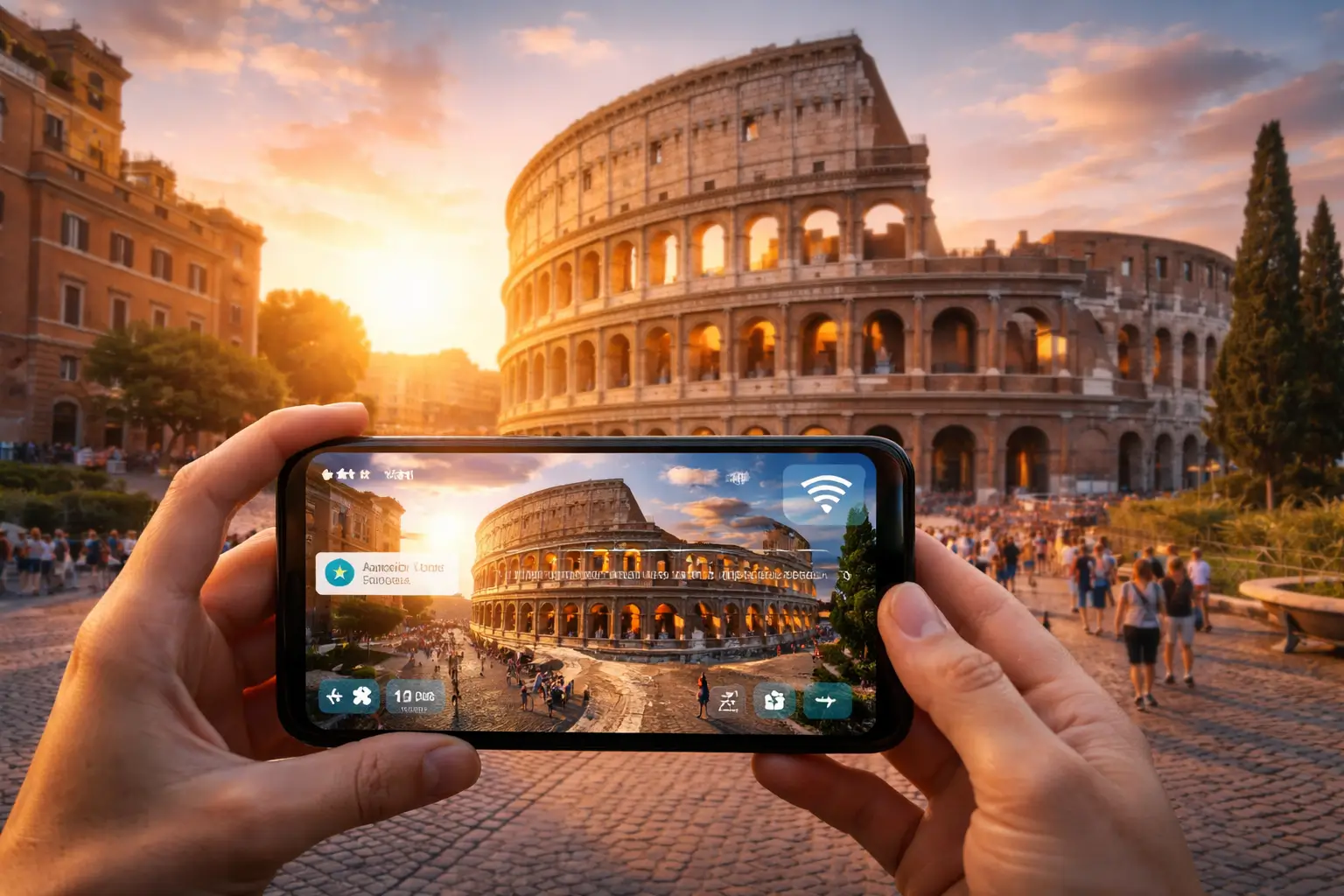
Travel smarter with augmented reality apps for tourism, offering immersive guides and interactive experiences.
You know that feeling when you arrive somewhere new, and everything looks beautiful—but slightly disconnected? You see the buildings, the streets, the monuments… yet you sense there’s more beneath the surface. Stories you can’t hear. History you can’t see. Hidden gems you walk right past.
That’s where augmented reality apps for tourism step in.
Instead of handing you a static map or a long paragraph on a plaque, these apps layer digital experiences over the real world. When you hold up your phone, the past unfolds in front of you. Directions appear on the street. Restaurant ratings hover over storefronts. Statues begin to “speak.” Suddenly, your trip becomes interactive.
If you want to travel smarter, explore deeper, and create experiences that feel personal rather than generic, augmented reality might become your new favorite travel companion.
Before you dive into recommendations and features, it helps to understand what you’re actually using.
Augmented reality (AR) enhances your real-world environment by adding digital elements, text, images, 3D models, or animations, on top of what your camera sees. Unlike virtual reality, which places you in a completely digital world, AR keeps you grounded in your physical surroundings.
When you use augmented reality apps for tourism, your smartphone or tablet becomes a lens that blends physical and digital spaces.
These apps rely on technologies like:
Major tech companies such as Apple (ARKit) and Google (ARCore) have accelerated the growth of AR by making development tools widely available. As a result, tourism boards, museums, and travel startups now create immersive experiences that were nearly impossible just a decade ago.
Industry reports consistently show rapid growth in AR adoption, especially in travel and hospitality. As more destinations compete for attention, interactive experiences are becoming a powerful differentiator.
When you travel, you want more than photos; you want a connection. AR makes that possible in ways traditional guidebooks cannot.
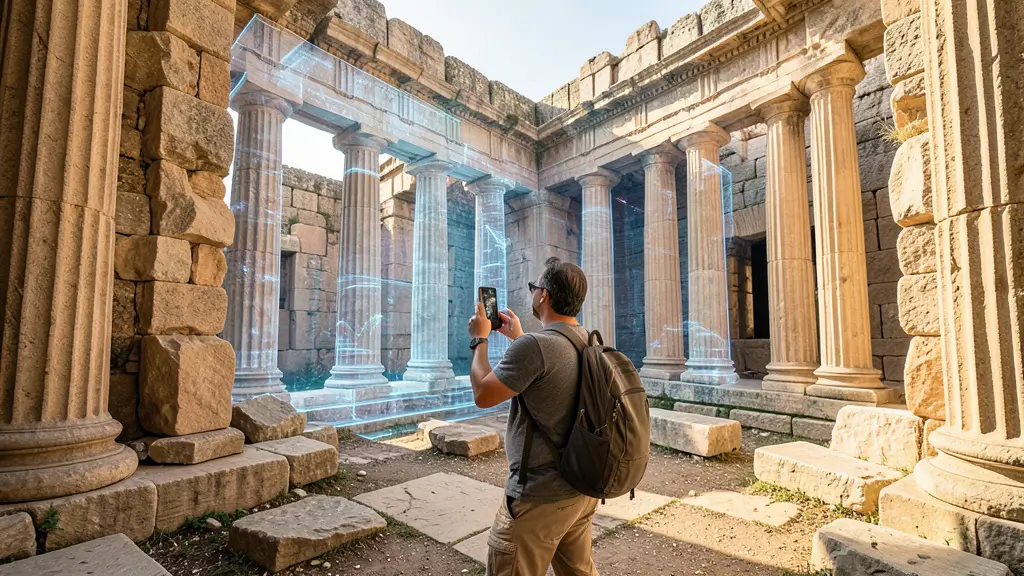
Imagine standing inside the Colosseum in Rome. Instead of staring at ruins, you raise your phone and see the arena reconstructed in full glory. Gladiators appear. The crowd roars. The structure is restored digitally before your eyes.
That’s the power of immersive storytelling.
Augmented reality apps for tourism allow you to:
When you experience history this way, it no longer feels distant. It feels immediate. Personal.
Visitor engagement studies show that interactive experiences increase both time spent on-site and memory retention. When you actively explore rather than passively read, your brain stays engaged.
Getting lost in a charming alley can be magical. Getting lost on your way to the train station is not.
Navigation has evolved beyond flat maps. For example, Google Maps offers Live View, which overlays arrows directly onto the street in front of you.
With augmented reality apps for tourism, you can:
Instead of constantly looking down at a map, you keep your eyes on your surroundings. That small shift improves safety and reduces stress.
Travel today is experiential and shareable.
AR apps introduce gamified tours, digital treasure hunts, and interactive photo filters tied to landmarks. You might unlock badges for visiting historical spots or collect digital artifacts along your route.
This doesn’t just entertain you. It encourages exploration beyond typical tourist zones.
Destinations benefit too. Visitors share AR-enhanced photos on social media, generating organic promotion. In many campaigns, AR-driven engagement has significantly increased social reach and visitor interaction.
Not all apps are created equal. If you’re choosing one for your next trip, pay attention to these core features.
The best AR travel apps function like dynamic guidebooks. When you point your camera at a building, you instantly see:
Instead of searching manually, information finds you.
Strong AR apps offer detailed 3D visualizations, allowing you to:
This is especially powerful in archaeological sites where physical reconstruction isn’t possible.
If you travel internationally, language barriers can limit your experience. High-quality augmented reality apps for tourism provide:
You gain deeper insight without needing a separate translation app.
Internet access isn’t always reliable, especially in remote or rural areas.
Look for apps that allow you to:
Offline support ensures your exploration doesn’t stop when your signal drops.
AR isn’t limited to one type of destination. It adapts to different travel styles.
Leading institutions like the British Museum and the Louvre Museum have integrated interactive technologies to modernize visitor engagement.
Inside museums, AR can:
Instead of reading long descriptions, you experience context visually and audibly.
Cities such as Tokyo and Barcelona have embraced digital tourism strategies.
In smart cities, AR apps help you:
Urban exploration becomes structured yet flexible; you design your journey in real time.
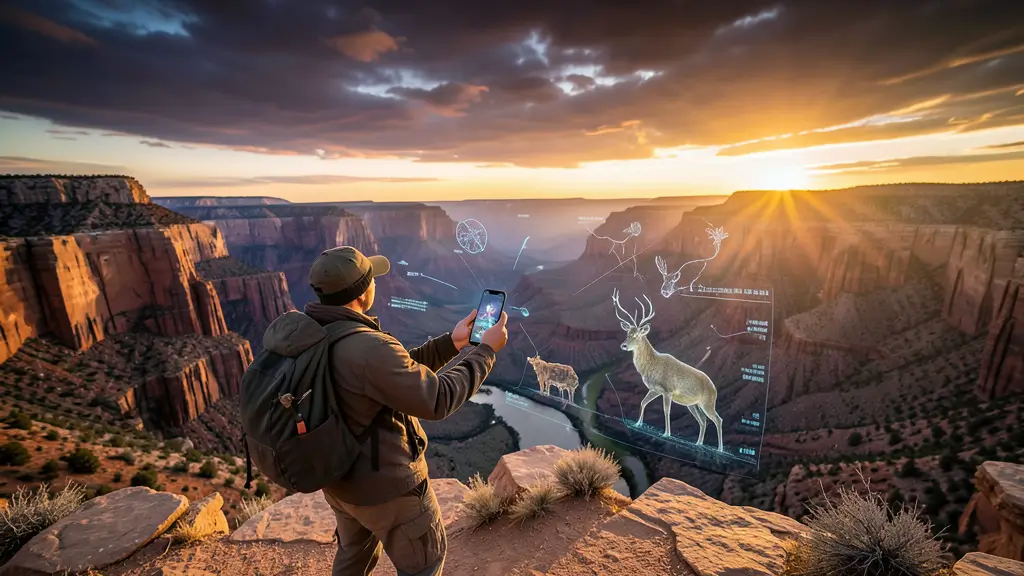
Even natural landscapes benefit from augmented overlays. At the Grand Canyon, for instance, AR can display geological timelines and rock layer explanations.
In national parks, apps may offer:
You don’t just hike. You understand what surrounds you.
If you run a tourism business or work in destination marketing, AR is more than a novelty; it’s strategic.
Interactive content keeps visitors on-site longer. Longer stays often translate to:
Engagement metrics frequently show improved visitor retention when immersive tools are available.
AR opens doors to monetization opportunities such as:
Destinations can offer tiered experiences without altering physical infrastructure.
With user consent and proper data practices, AR platforms can provide:
This data helps tourism boards optimize visitor flow and enhance underexplored areas.
No technology is flawless. It’s important to understand potential limitations.
As hardware improves, these issues gradually decrease, but they still exist.
Not every traveler feels comfortable with digital tools. Clear interfaces and simple onboarding are essential.
Design must consider:
Because AR apps often use location tracking and camera input, privacy protection is critical.
You should look for apps that:
Transparency builds trust.
AR in tourism is still evolving. The next few years will likely introduce even more immersive possibilities.
As AR glasses become more mainstream, you may not need to hold up your phone. Digital overlays could appear seamlessly in your field of vision, allowing hands-free exploration.
Future apps will likely analyze your preferences and behavior to suggest:
Instead of generic tours, you’ll receive a journey tailored to you.
AR may also enable preview experiences before you travel. You could explore a digital overlay of a destination from home, then use the same app on-site for deeper interaction.
Physical and digital travel will blend more fluidly.
Augmented reality apps for tourism are mobile applications that overlay digital content—such as 3D models, text, and animations—onto real-world locations to enhance your travel experience.
They improve your trip by adding historical reconstructions, real-time navigation overlays, multilingual translations, and interactive storytelling. Instead of passively observing, you actively explore.
Many apps follow a freemium model. You can access basic features for free, while advanced guided tours or premium content may require payment.
Some apps allow offline access to downloaded maps and guides, but features like live navigation and cloud-based updates typically require internet access.
Most modern smartphones and tablets support AR functionality. Future developments in wearable AR glasses will likely expand compatibility.
Travel is no longer limited to what your eyes can see. With augmented reality apps for tourism, you unlock layers of meaning hidden within streets, monuments, and landscapes.
You navigate more confidently.
You learn more deeply.
You experience destinations in ways that feel vivid and personal.
As AR technology continues to evolve, the line between guidebook and experience will disappear. The world becomes interactive, responsive, and tailored to your curiosity.
If you’re planning your next adventure, don’t settle for surface-level sightseeing. Download an AR travel app, explore a new destination, and see how digital layers can transform the way you move through the world.
Your next journey doesn’t just start at the airport—it starts the moment you decide to explore differently.