Physical Address
304 North Cardinal St.
Dorchester Center, MA 02124
Physical Address
304 North Cardinal St.
Dorchester Center, MA 02124


Discover the best augmented reality medical apps for surgeons, doctors, and students. Explore top AR healthcare tools improving training and patient care.
Healthcare technology has evolved rapidly over the past decade, and one of the most promising innovations you can explore today is augmented reality medical apps. These applications combine real-world environments with digital overlays, such as 3D anatomy models, patient data, or surgical guidance, to help medical professionals perform tasks more accurately and efficiently.
If you work in healthcare, medical education, or clinical training, AR-powered tools can transform how you learn, diagnose, and treat patients. Instead of relying solely on textbooks, flat images, or traditional training methods, you can interact with lifelike digital medical models directly within your physical environment.
The rise of mobile devices and advanced AR headsets has accelerated the adoption of these tools across hospitals, universities, and surgical centers. According to research from Statista, the global market for augmented and virtual reality in healthcare continues to expand as medical institutions invest in immersive technologies for training, diagnostics, and patient care.
In this guide, you’ll discover some of the best augmented reality medical apps available today, along with the features that make them valuable for healthcare professionals like you.
Before choosing an AR healthcare application, it helps to understand what separates a powerful clinical tool from a simple visualization app. The best augmented reality medical apps combine advanced visualization, reliable data, and intuitive interfaces designed specifically for medical workflows.
When evaluating AR medical apps, pay attention to the following capabilities:
Global healthcare organizations, including the World Health Organization, emphasize that digital health technologies should support clinical decision-making while maintaining safety, usability, and data security.
Understanding these features helps you select tools that truly improve your daily work rather than adding unnecessary complexity.
The following applications represent some of the most widely recognized AR tools used in healthcare, medical education, and surgical planning. Each one focuses on a specific medical need, from anatomy education to real-time surgical collaboration.
Best for Medical Students and Anatomy Learning
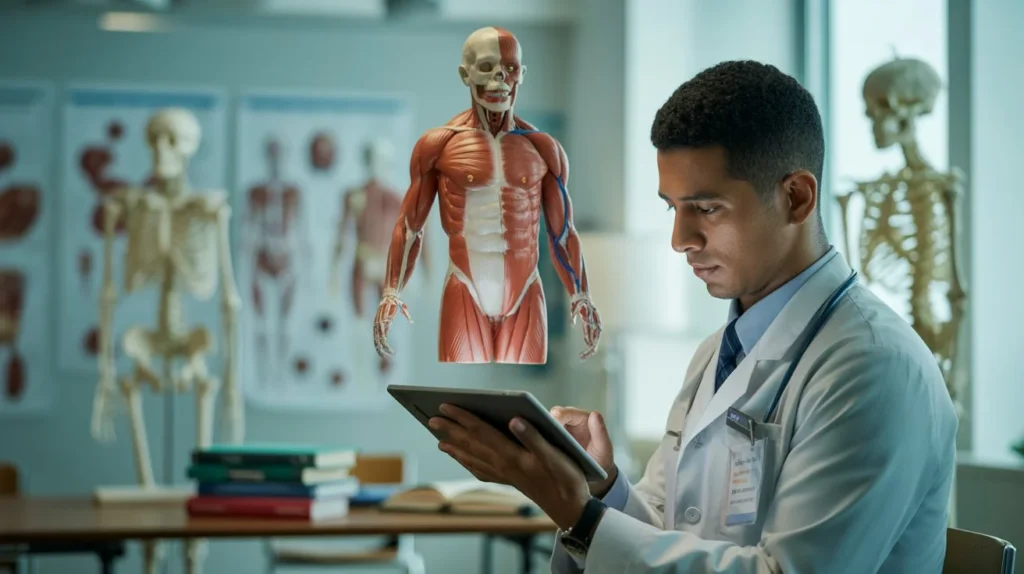
If you’re studying medicine or teaching anatomy, Complete Anatomy is one of the most advanced platforms available. This application delivers an incredibly detailed 3D model of the human body that you can explore through augmented reality.
Instead of memorizing flat diagrams, you can examine organs, muscles, and body systems from every angle in an interactive 3D space.
Key features include:
Many universities and medical schools use tools like Complete Anatomy to support digital anatomy education. Interactive visualization has been shown to improve knowledge retention compared with traditional learning methods, according to educational research summarized by institutions such as the Association of American Medical Colleges.
If your goal is to deepen your understanding of anatomy or teach complex structures more effectively, this AR app offers a powerful learning environment.
Best AR App for Remote Surgical Assistance
Proximie takes augmented reality beyond education and brings it directly into the operating room. The platform allows surgeons to collaborate remotely by overlaying digital guidance on live surgical video.
Imagine performing a complex procedure while a specialist from another hospital, or even another country, can guide you visually in real time.
Proximie enables this level of collaboration through several advanced features:
Remote surgical collaboration tools have become increasingly valuable for hospitals that lack access to specialized expertise.
With platforms like Proximie, you can connect with specialists anywhere in the world without leaving the operating room.
Best AR Medical App for Surgical Training
Learning surgical procedures traditionally requires years of observation and hands-on experience. Touch Surgery helps accelerate that learning curve by providing interactive procedure simulations.
Through this platform, you can practice surgical workflows step by step in a digital environment before entering a real operating room.
The application offers:
By allowing repeated practice in a risk-free environment, simulation platforms help medical professionals improve confidence and procedural understanding. Training technologies like Touch Surgery have become widely recognized tools for modern medical education.
If you’re preparing for surgical training or looking to strengthen procedural knowledge, this AR-supported learning platform can be a valuable addition to your training toolkit.
Best AR App for Vein Visualization
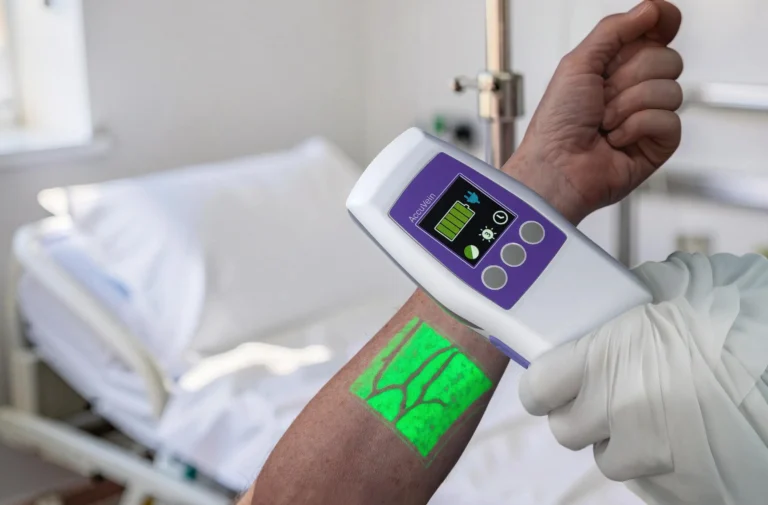
Finding veins for injections or IV placement can sometimes be challenging, especially in pediatric, elderly, or critically ill patients. AccuVein addresses this problem with augmented reality visualization technology.
The system projects a digital map of veins onto the patient’s skin, helping healthcare providers locate suitable veins more quickly.
Key advantages include:
Vein visualization technology is widely used in hospitals and clinics to improve patient care and reduce repeated needle attempts.
Read more about: How To Improve Vein Detection Accuracy with Augmented Reality?
Best AR Medical App for Spine Surgery
Augmented reality is also revolutionizing complex surgical procedures. The xVision system from Augmedics provides surgeons with AR-guided navigation during spinal surgery.
Using specialized headsets, surgeons can visualize a patient’s anatomy, including vertebrae and surgical instruments, directly within their field of view.
The platform includes several advanced capabilities:
Technologies like xVision aim to improve surgical accuracy by helping surgeons place implants or screws with greater precision.
For specialists performing spine surgery, AR-guided navigation tools represent a significant advancement in surgical technology.
Augmented reality is more than a technological novelty; it can meaningfully improve how healthcare professionals perform their work.
When implemented effectively, AR medical apps support better learning, faster procedures, and stronger collaboration across medical teams.
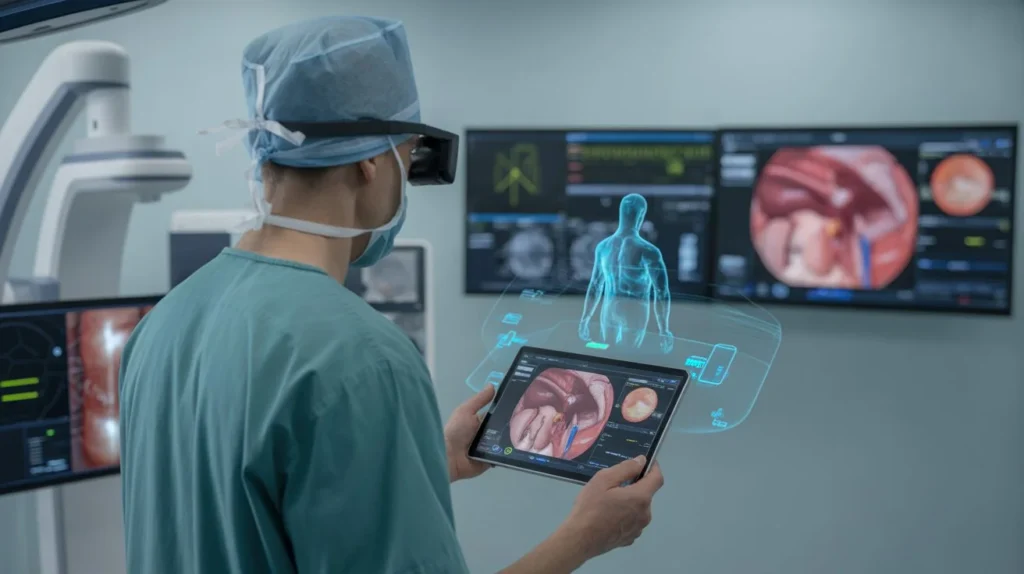
Healthcare professionals who adopt AR tools often experience several advantages:
• Improved surgical precision
Real-time visualization helps surgeons better understand anatomical structures during procedures.
• Enhanced medical education
Students can interact with complex anatomy models rather than memorizing static images.
• Reduced medical errors
Clear visual guidance can support more accurate decision-making.
• Faster diagnosis and planning
3D visualization helps doctors understand conditions and treatment options more quickly.
• Better collaboration between specialists
Remote AR tools allow doctors to guide procedures from anywhere in the world.
Consulting research from organizations like McKinsey & Company highlights how immersive technologies such as AR and VR are increasingly integrated into healthcare innovation strategies.
As hospitals continue modernizing their digital infrastructure, AR-based tools are becoming a natural extension of clinical technology.
Not every AR healthcare application will suit your needs. Selecting the right solution depends on your role, your environment, and how you plan to use the technology.
Before adopting an AR medical app, evaluate these factors carefully.
1. Your primary use case
Are you looking for a tool for:
Different apps specialize in different areas.
2. Device compatibility
Some applications run on smartphones and tablets, while others require specialized AR headsets.
3. Clinical reliability
For clinical use, ensure the software has undergone proper evaluation or regulatory review when required.
4. Integration with hospital systems
Hospitals often require software that integrates with imaging systems, patient records, or surgical platforms.
5. Cost and licensing
Advanced medical software may involve subscription fees, training costs, or hardware requirements.
Choosing the right AR application ensures you gain real clinical value rather than simply experimenting with new technology.
The capabilities of augmented reality in healthcare continue to expand rapidly. As hardware improves and artificial intelligence becomes more integrated with AR systems, the next generation of medical apps will offer even more advanced capabilities.
Some emerging developments include:
Technology research firms such as the National Institutes of Health identify immersive technologies among the innovations shaping the future of healthcare.
As these systems evolve, AR tools may become a standard component of medical practice, supporting everything from education to highly specialized surgical procedures.
Augmented reality medical apps allow healthcare professionals to visualize digital medical information within the real world. These tools are commonly used for medical training, surgical planning, diagnostics, and remote collaboration between doctors.
Yes. Hospitals and medical schools increasingly use AR tools such as Complete Anatomy and Proximie for education, surgical planning, and clinical collaboration.
Most augmented reality medical apps run on:
Some AR medical applications, especially those used during medical procedures, must comply with regulations from authorities such as the U.S. Food and Drug Administration or similar regulatory agencies in other countries.
Augmented reality is rapidly transforming the way healthcare professionals learn, collaborate, and perform complex procedures. From immersive anatomy platforms like Complete Anatomy to surgical collaboration tools such as Proximie, modern augmented reality medical apps are already improving medical education and clinical care.
If you’re exploring new ways to enhance training, increase surgical precision, or improve patient outcomes, AR technology offers practical solutions that were impossible only a few years ago.
The best way to understand their potential is simple: start testing the apps that fit your workflow. Explore their features, integrate them into your training or practice, and see how augmented reality can support the next stage of your medical expertise.
The healthcare industry is moving toward immersive technology. This is the moment to discover how augmented reality medical apps can support your work and elevate the level of care you deliver.